Keep the Facility Shipping and Receiving While Construction Happens Around It
Warehouse downtime costs between $5,000 and $100,000 per hour. Uncontrolled construction dust settles on product, triggers food safety violations, disables automation sensors, and creates forklift-to-worker conflicts that end careers. 5DCCS modular containment systems keep construction zones cleanly separated from active operations so the dock stays open, the racking stays in service, and the facility keeps its compliance standing throughout the project.
The Warehouse Construction Problem
Two Workforces, One Building, Completely Different Hazard Profiles
Active warehouse construction is one of the most hazardous occupied-space scenarios in construction. Construction workers drilling into concrete, running conduit overhead, or welding steel mezzanine frames are operating under OSHA 29 CFR 1926 construction standards. Warehouse employees driving forklifts, pulling pallet jacks, and moving through the same building are covered under 29 CFR 1910 general industry standards. OSHA's multi-employer worksite policy means the controlling contractor is accountable for both populations — and a forklift-to-construction-worker collision, a piece of falling hardware, or silica dust drifting into an active pick aisle creates liability that belongs to the GC.
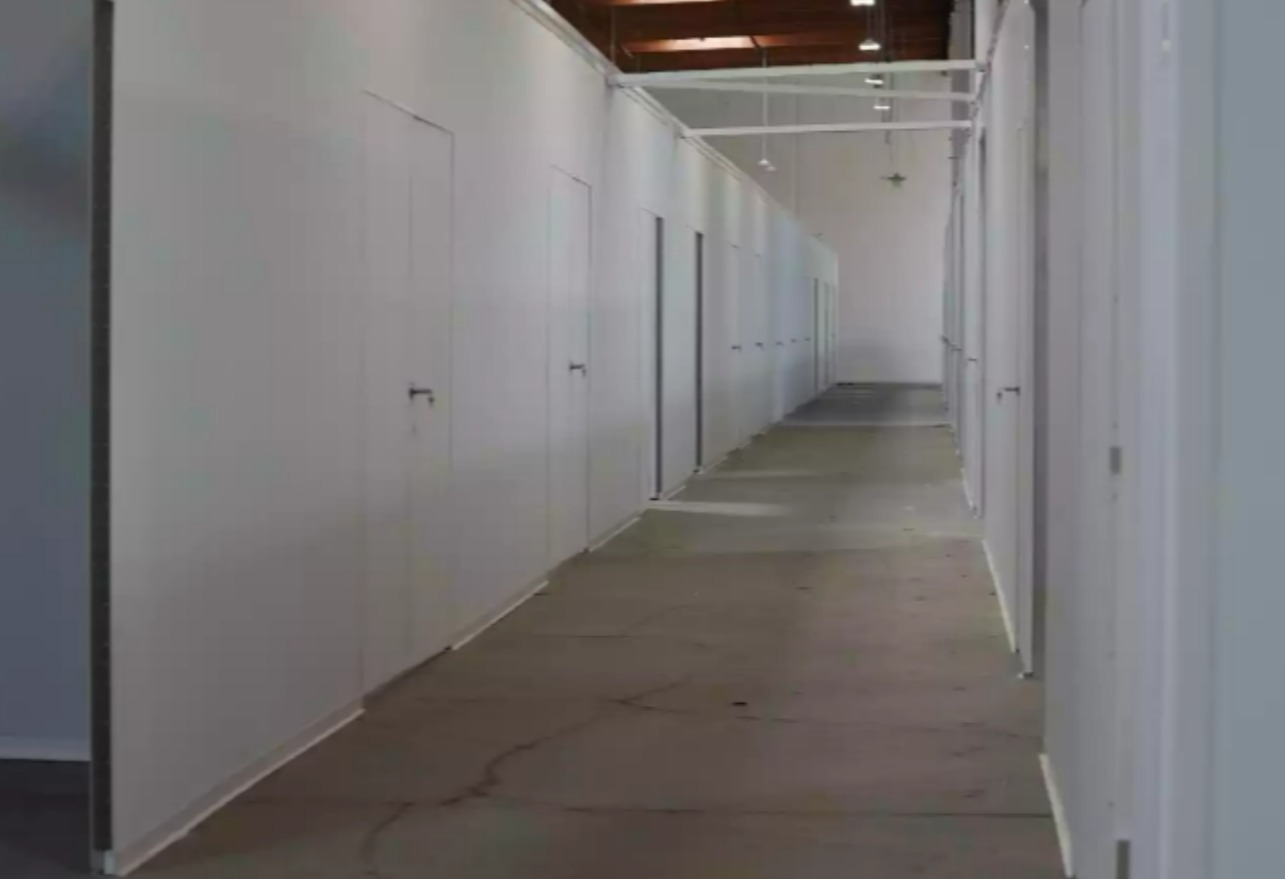
Containment walls are the primary mechanism for keeping those two populations separated. A rigid modular barrier at the construction zone perimeter defines where construction ends and warehouse operations begin — creating a physical boundary for access control, dust control, debris containment, and forklift traffic management simultaneously. Without that boundary, the hazard environments overlap and no one can reliably control either one.
In-Plant Offices and Enclosed Work Zones
Interior Build-Outs Inside Warehouse Footprints Are a Specialty of Their Own
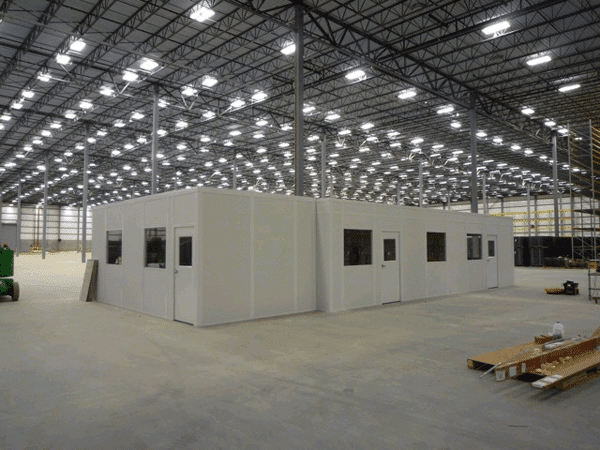
One of the most common warehouse construction scenarios is the in-plant office or modular enclosed workspace — a finished office, break room, supervisor station, or training room built inside the warehouse shell. These build-outs generate gypsum dust, VOC fumes from paint and floor finishes, and HVAC installation debris in a space where product is stored 20 feet away on open racking. In food, pharmaceutical, or electronics warehouses, those fumes and particulates are compliance events, not just housekeeping problems.
Our modular containment systems are well-suited for this application specifically. A clean, sealed perimeter around the build-out zone keeps construction activity contained from day one, allows adjacent aisles to remain in full operation throughout the project, and comes down at closeout without the drywall demolition debris that a conventional built-in-place office generates at the end of the lease.
Where We Work
Containment for Every Warehouse & Distribution Project Type
From racking installations and automation upgrades to cold storage expansion and interior office build-outs, warehouse construction covers a wide range of work types — each generating distinct hazards that require physical separation from active operations.
Racking, Mezzanines & Structural Steel
Pallet rack installation requires concrete anchor drilling that generates silica dust. Mezzanine construction creates falling debris and weld spatter risks directly above active storage and pick aisles. Our containment systems create defined construction perimeters with overhead protection provisions, keeping debris and particulate off stored product while forklift traffic continues in adjacent aisles.
Conveyor, Automation & AS/RS Upgrades
Micro-dust from construction settling on optical sensors, LiDAR units, and laser guidance systems causes AGV misrouting and conveyor scanner failures in adjacent automated zones. Our sealed barrier systems prevent particulate migration into active automation environments during installation of new conveyor systems, sorters, and robotic pick infrastructure.
In-Plant Offices & Interior Workspace Build-Outs
Drywall, painting, electrical, HVAC, and flooring work inside warehouse footprints generates VOCs and gypsum dust that can migrate across open racking to stored product. In food, pharmaceutical, or electronics warehouses, this is a compliance event. Our containment barriers isolate build-out work from day one, with sealed top tracks that prevent VOC migration into adjacent storage zones.
Cold Storage Expansion & Refrigeration Upgrades
Cold storage construction requires cutting through insulated panels and running refrigerant piping through active temperature-controlled zones — every breach risks thermal infiltration that disrupts product storage and can trigger USDA FSIS or FDA temperature compliance violations. We design containment with vapor barrier provisions and airlock vestibule configurations to maintain thermal separation during refrigeration work.
Food-Grade & FSMA-Regulated Warehouse Renovation
Under 21 CFR Part 117, food warehouses must prevent physical contamination of stored product. Construction dust and debris migrating onto food or food-contact packaging materials are potential cGMP violations that can trigger FDA inspection findings. Our rigid sealed barriers provide the physical contamination control that FSMA hazard analysis requires when construction occurs adjacent to active food storage.
LED Lighting, Electrical & Sprinkler Retrofits
LED lighting upgrades require overhead drilling that drops debris directly onto product stored on racks below. Sprinkler system modifications require taking portions of the active system offline — every zone of impairment requires fire watch under NFPA 25. Our containment systems define the impairment zone, minimize the area requiring fire watch coverage, and protect product from overhead construction debris.
Regulatory Framework
The Overlapping Codes That Govern Occupied Warehouse Construction
Warehouse construction is regulated by an unusually dense stack of overlapping standards. OSHA's multi-employer worksite policy means the controlling contractor is accountable for both construction workers under 29 CFR 1926 and warehouse employees under 29 CFR 1910 — two separate regulatory frameworks that both apply simultaneously inside the same building.
For food, pharmaceutical, and cold chain warehouses, an additional layer of FDA, USDA, and Good Distribution Practice requirements applies on top of the OSHA and fire code baseline. Construction that crosses any of these regulatory lines does not just create a safety incident — it creates an inspection finding that can affect operating licenses, import alerts, or distribution contracts.
The containment barrier is often the single most important compliance mechanism on a warehouse construction project: it separates the regulated storage environment from the uncontrolled construction zone, limits the area of fire suppression impairment, creates the forklift exclusion zone, and provides the physical contamination control that FSMA hazard analysis requires.
Why Modular Walls
What Warehouses Need That Plastic Sheeting Cannot Provide
Plastic sheeting is inexpensive, tears under forklift air blast and HVAC pressure, provides no acoustic attenuation, fails fire code in egress paths, and leaves dust settling on product the moment a section gaps. Here is what modular walls provide in a warehouse environment.
Rigid Structure That Holds Against Forklift Air Blast and HVAC Pressure
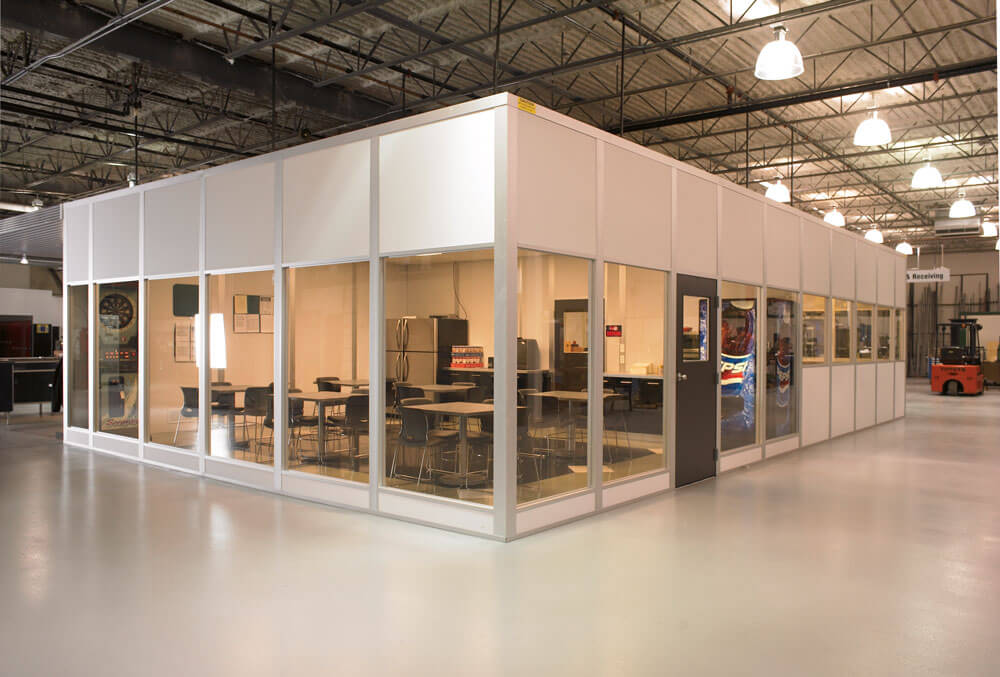
Active warehouses run constant HVAC airflow and forklift traffic that generates significant air movement near barriers. Plastic sheeting billows, tears, and gaps under these conditions. Our rigid panel systems maintain sealed perimeters throughout the project duration without daily re-taping or patching.
Physical Contamination Control for FSMA and cGMP Compliance
Food, pharmaceutical, and electronics warehouses need barriers that genuinely prevent dust and particulate from reaching stored product. Our sealed panel systems with floor-to-ceiling tracks provide the physical contamination control that 21 CFR Part 117 hazard analysis and cGMP requirements call for adjacent to active food and pharmaceutical storage.
ASTM E84 Class A Fire Rating in High-Combustible Environments
Warehouses store combustible goods. Barriers in occupied warehouses must meet ASTM E84 Class A fire rating — the standard required in egress paths and near high-combustibility storage. All panels in our systems are Class A rated, eliminating a common compliance gap that plastic sheeting creates in warehouses with active fire suppression systems.
Same-Day Installation Without Disrupting Receiving or Shipping Operations
Our installation generates zero cutting dust and zero debris — critical when the floor 10 feet away is active pick-and-pack or receiving. Most standard warehouse configurations install in a single day, so the construction zone is sealed and forklift traffic in adjacent aisles is protected before the construction crew's first tool lands on the concrete.
Reconfigurable as Construction Phases Advance Through the Building
Warehouse renovations that move zone by zone — racking row by racking row, or bay by bay for LED upgrades — need containment that relocates without a full rebuild. We reconfigure without demolition, keeping the construction footprint tightly controlled as phases advance and minimizing the area of operation that is impacted at any given time.
How It Works
From First Call to Final Removal in 5 Steps
We make containment straightforward. Most setups complete in a single day, with no mess left behind on either side of the wall.
Consultation & Site Assessment
We review your scope, timeline, and compliance needs from drawings or a site walk.
Custom Containment Plan
We design a layout with door placement, negative air ports if needed, and multi-phase sequencing.
Delivery & Installation
Our crew delivers and installs. Most setups finish in a single day. Clean and professional on both sides.
Ongoing Support & Adjustment
Projects change. If your layout needs to shift or expand, we handle it without rebuilding from scratch.
Removal & Closeout
When work is done, we remove everything. No demolition dust, no debris, no cleanup left for your team.
Planning Construction in an Active Warehouse or Distribution Center?
Most quote requests receive a response within one business day. Tell us your facility type, your construction scope, and your forklift traffic and compliance requirements — and we will put together a containment plan that keeps the facility operational and your project on schedule.
FAQ
Warehouse Containment Questions
Not finding what you need? Call us at (855) 684-3752 or use the contact form — we are happy to talk through your project before you commit to anything.