Tenant Improvement Containment That Keeps the Office Open and the Project on Schedule
TI projects in occupied office buildings face a pressure that most contractors underestimate: every day the containment wall delays the work zone, downstream trades wait. Drywall containment for a commercial partition runs 8 to 14 calendar days before it can be sealed, and that dead time sits on the critical path. 5DCCS modular systems go up the same day, generate zero dust during installation, and come down at project close without a demolition event.
The Schedule Problem with Drywall TI Containment
Drywall Containment Sits on the Critical Path. Modular Does Not.
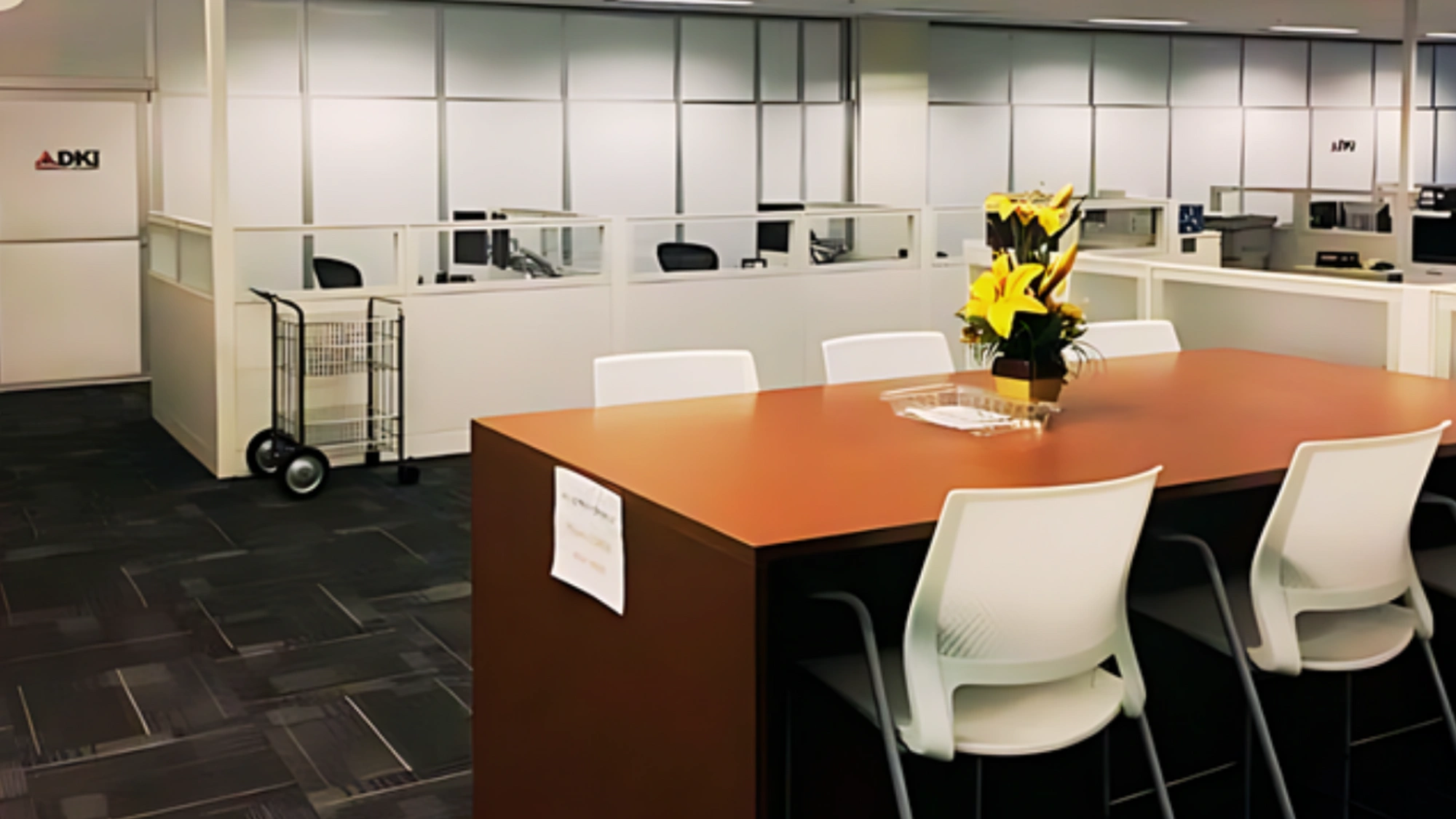
A typical 20-linear-foot drywall containment wall on a commercial TI project takes 25 man-hours over its full lifecycle — and more critically, it imposes 8 to 14+ calendar days of mandatory dead time between framing and paint-ready finish. Three coats of joint compound, each requiring a 24-hour dry cycle before the next coat can begin. That dead time is not recoverable: painting, flooring, millwork, and fixtures all sit downstream waiting for the containment wall to finish curing.
In tenant improvement leases with liquidated damages clauses, that 10-plus-day schedule advantage per phase is not a convenience — it is direct protection against delay penalties. A modular containment wall goes up the same day, with a single trade, generating zero dust and zero debris. When the phase advances, reconfiguration takes hours, not days. That is why GCs doing repeat TI work in occupied Class A buildings use modular systems for containment rather than drywall.
The Occupant Problem with Conventional Containment
Construction Noise Reduces Office Productivity by Up to 66 Percent
Research on occupational noise consistently shows that background noise above 65 dBA degrades performance on complex cognitive tasks, increases error rates, and reduces attention span. In open-plan offices — where ambient noise levels typically run 45 to 55 dBA — even moderate construction noise audible through a conventional barrier affects worker performance across the entire floor plate. The building owner's obligation to neighboring tenants does not pause for renovation.
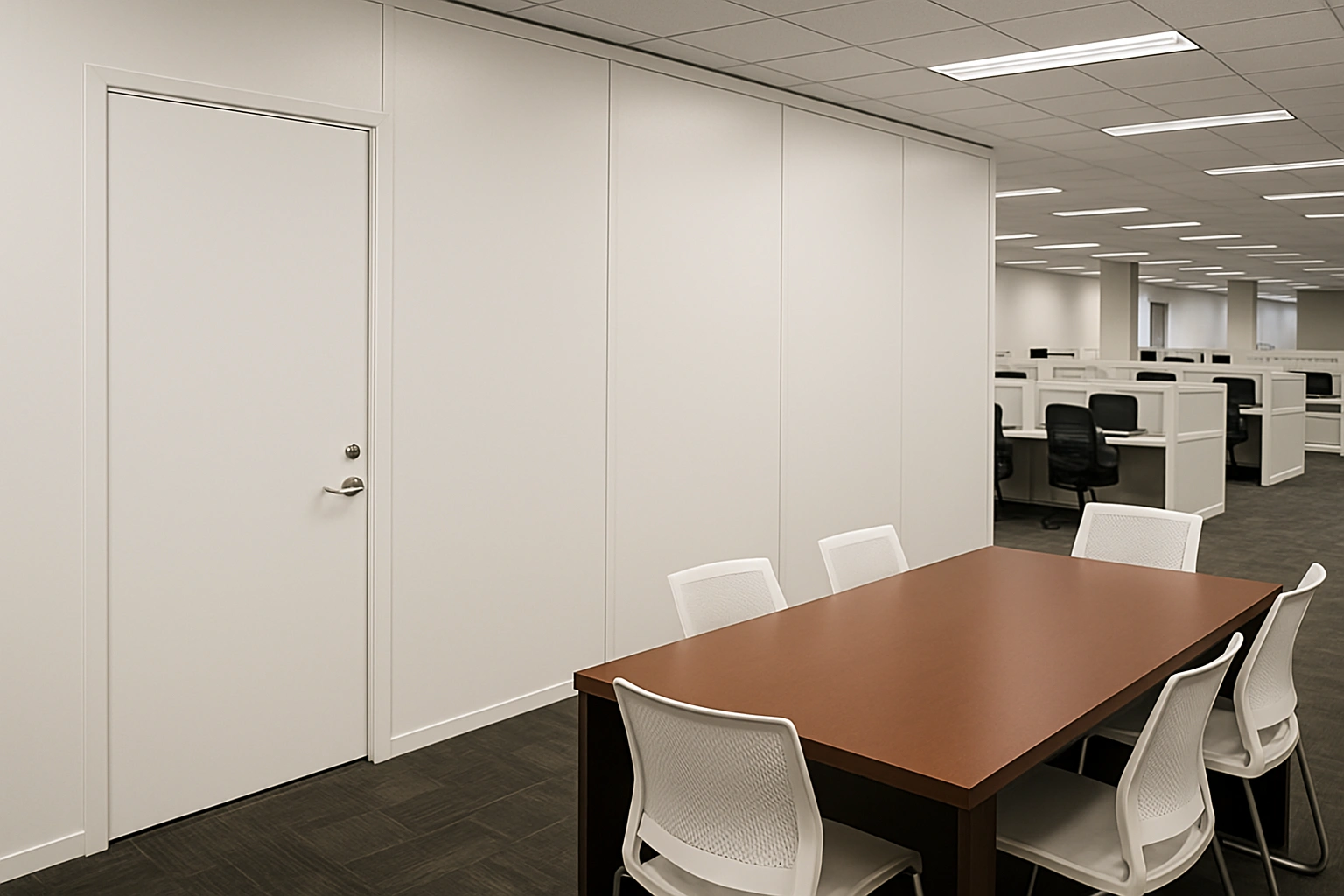
The right containment system is not just about separating the work zone from the occupied space — it is about how much noise reaches the other side. Standard plastic sheeting provides essentially no acoustic attenuation. Our STC-rated panel systems reduce transmitted noise meaningfully, making the difference between an adjacent tenant whose work is disrupted all day and one who barely notices the project is underway. For law firms, financial services, and HR departments where confidentiality and concentration are non-negotiable, STC 45+ is the standard we target.
Where We Work
Containment for Every Commercial Office & TI Project Type
From floor-by-floor Class A buildouts to suite reconfigurations and lobby upgrades, every commercial TI project has its own schedule pressure, neighboring tenant obligations, and building standard requirements. Here is how we support active construction across the full range of office and commercial settings.
New Tenant Build-Outs & Suite Fit-Outs
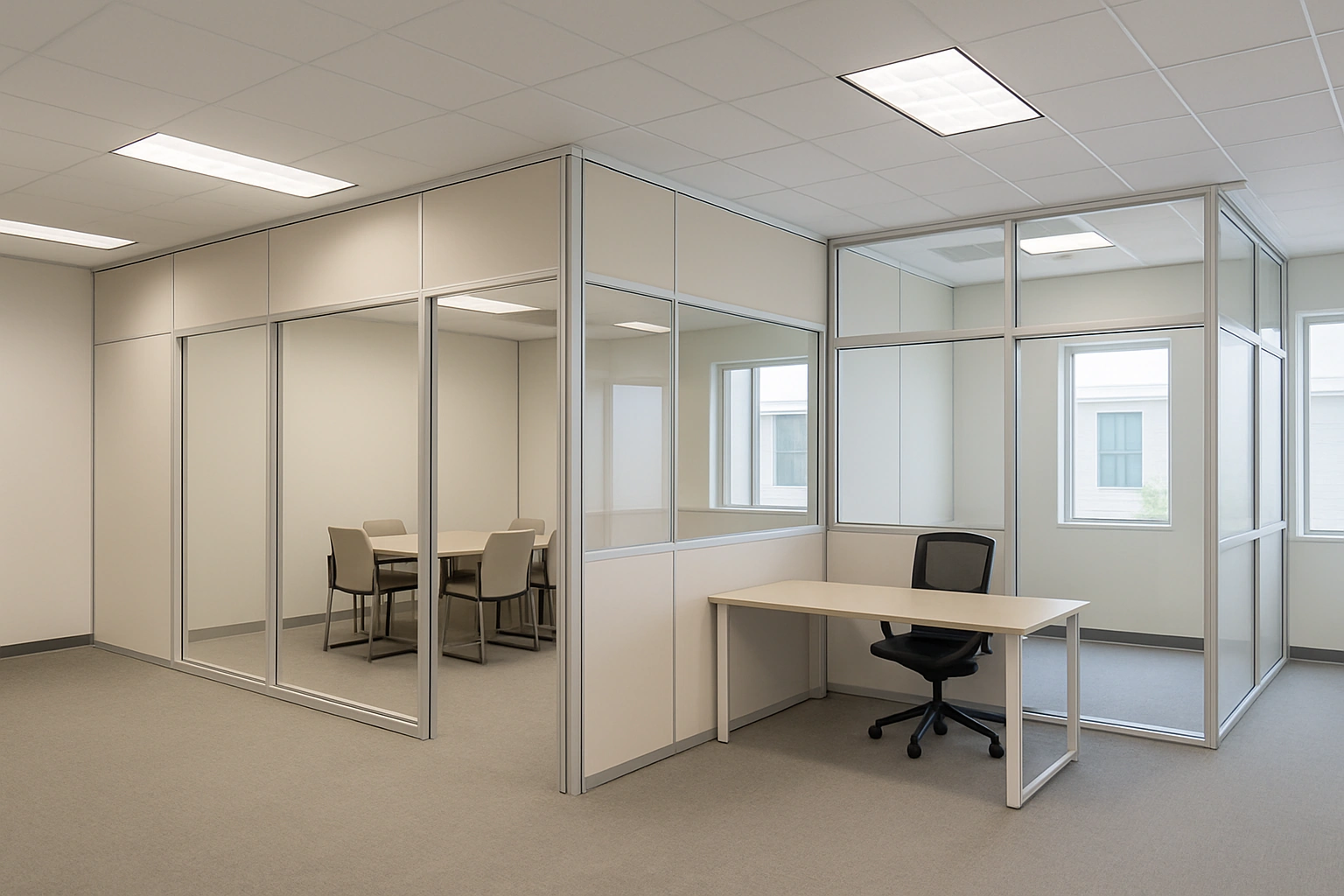
New tenant fit-outs in occupied multi-tenant buildings require containment that isolates the construction zone from operational neighboring suites from day one. Our systems install before the first trade arrives, eliminating the 8-to-14-day wait that drywall containment imposes before work can begin in earnest. When the build-out advances to a new phase, we reconfigure — no demolition, no debris, no secondary dust event in the occupied corridor.
Floor-by-Floor & Phased Office Renovations
Multi-floor office renovations in occupied buildings require containment that moves as each floor completes and the next phase begins. Our modular systems are designed for exactly this scenario: fast reconfiguration between phases without demolition, single-trade installation that does not pull multiple trades off other work, and no joint compound dry cycles that push the critical path into the next month's schedule.
Lobby, Reception & Common Area Upgrades
Lobby and reception area renovations happen in the most visible, client-facing space in the building. The containment system is the first thing visitors see. Our clean-finish panels present a professional appearance that tells clients the project is managed — not improvised. For luxury Class A properties where brand standards extend to the construction zone, we can accommodate property manager requirements for panel appearance and corridor presentation.
Law Firms, Financial Services & Confidential-Use Spaces
Law firms, financial advisors, HR departments, and executive suites require STC-rated containment that maintains acoustic privacy during adjacent renovation. Our highest-STC panel options target the STC 45+ range appropriate for these uses, keeping construction noise on its side of the barrier and protecting the confidentiality and concentration that these professional environments require throughout the project.
IT Infrastructure & Server Room Adjacencies
Construction adjacent to server closets, IT rooms, and technology-dense workspaces presents a dust contamination risk to hardware and networking equipment. Our sealed barrier systems prevent construction particulate from reaching sensitive electronics, protecting equipment that office tenants depend on for continuous operations throughout a renovation that might run months on an occupied floor.
Class A Building Repositioning & Common Area Upgrades
Property owners repositioning aging office buildings — upgrading amenity floors, modernizing lobbies, renovating fitness centers and conference suites — need containment that holds through a multi-month project while the rest of the building operates normally. Our systems provide the multi-phase reconfigurability that building repositioning projects require, without the repeated drywall install-and-demolish cycle that adds cost and schedule to every phase transition.
What TI Projects Require
The Standards and Obligations That Govern Commercial Office Construction
Tenant improvement projects in occupied commercial office buildings sit at the intersection of construction code, lease obligations, and neighboring tenant rights. Building management typically enforces its own construction standards on top of local code — requiring professional-appearance barriers, limiting work hours, and holding the GC accountable for dust and noise reaching occupied suites. The containment subcontract is often the first thing a building engineer reviews when a TI permit is submitted.
The key difference between TI containment and retail or healthcare containment is who you are protecting and what the consequences are. In office buildings, the consequences of inadequate containment are noise complaints, lease disputes, tenant rent abatement claims, and building management work stoppages. None of those are minor. Choosing the right containment system from the start — one that is professional in appearance, STC-rated for acoustic performance, and fire-rated for the building code — is how GCs avoid those conversations entirely.
Modular vs. Drywall
The Case Against Drywall Containment on TI Projects
Drywall is the default containment method because GCs already have drywall crews on site. But on an occupied TI project in an active office building, default is expensive. The schedule cost, the noise during installation, the demolition debris at the end, and the neighboring tenant exposure all have real dollar consequences that modular systems eliminate.
| Factor | Modular Walls (5DCCS) | Drywall Containment | Plastic Sheeting |
|---|---|---|---|
| Time to Usable Containment | Same day — single trade, single visit | 8 to 14+ calendar days — framing, hanging, three mud coats, sand, prime, paint | Fast, but no structural integrity or fire compliance |
| Critical Path Impact | None — goes up before other trades arrive | Sits on critical path; downstream trades wait on drywall completion | Fast to install but fails under construction activity |
| Dust During Installation | Zero — no cutting, no sanding, no debris | Significant — framing, drywall cutting, sanding all generate dust in occupied building | Minimal during install |
| ASTM E84 Class A Fire Rating | Yes — all panels rated | Yes — when properly assembled | No — fails in egress corridors and occupied commercial spaces |
| STC Acoustic Performance | STC 21 to 40+ options available | STC varies by assembly; comparable range achievable but adds cost and time | Minimal — plastic transmits nearly all construction noise |
| Professional Appearance | Clean finish on both sides from day one | Finished after painting — but only after 8-14 days | No — visually unprofessional in any Class A or B setting |
| Reconfigurability Between Phases | Same day — no demolition required | Demolish and rebuild from scratch — full drywall cycle repeats | Fast to move but re-hanging compromises containment quality |
| Demolition at Project Close | None — panels removed and reused | Full demolition event — dust, debris, haul-off, CALGreen diversion tracking | Disposal required — plastic is single-use |
| Liquidated Damages Exposure | Minimized — 10+ day schedule advantage per phase | Elevated — dead time from mud/dry cycles can push project past lease delivery dates | Not applicable to schedule, but containment failures create other exposures |
How It Works
From First Call to Final Removal in 5 Steps
We make containment straightforward. Most setups complete in a single day, with no mess left behind on either side of the wall.
Consultation & Site Assessment
We review your scope, timeline, and compliance needs from drawings or a site walk.
Custom Containment Plan
We design a layout with door placement, negative air ports if needed, and multi-phase sequencing.
Delivery & Installation
Our crew delivers and installs. Most setups finish in a single day. Clean and professional on both sides.
Ongoing Support & Adjustment
Projects change. If your layout needs to shift or expand, we handle it without rebuilding from scratch.
Removal & Closeout
When work is done, we remove everything. No demolition dust, no debris, no cleanup left for your team.
Pricing a TI Project in an Occupied Office Building?
Most quote requests receive a response within one business day. Tell us your floor plan, your phasing sequence, and your delivery date — and we will put together a containment scope that protects your schedule and keeps the neighboring tenants off your back.
FAQ
TI & Office Containment Questions
Not finding what you need? Call us at (855) 684-3752 or use the contact form — we are happy to talk through your project before you commit to anything.