
Renovation That Stays Behind the Scenes While the Guest Experience Stays Front and Center
Construction noise above 70 dBA causes guests to leave hospitality spaces before they have finished what they came to do. Guest rooms need ambient noise below 45 dBA for comfortable sleep. In hospitality, the construction barrier is not just a safety measure. It is a revenue protection tool. 5DCCS modular containment systems keep renovation work discreet, the lobby presentable, and the guest experience uninterrupted throughout the project.
The Hospitality Renovation Challenge
A Guest Who Hears Jackhammers or Sees Plastic Sheeting Does Not Come Back
Hospitality renovation differs from every other occupied construction environment in one critical way: the people on the other side of the barrier are paying for an experience. A business traveler trying to sleep through a wall with audible construction has a legitimate complaint and a review platform to express it on. An event planner whose ballroom renovation is visible from the lobby during a competing function has a problem that costs the venue a rebooking. In hospitality, guest perception of the renovation is as important as the renovation itself.
Research on hospitality noise consistently shows that construction noise above 70 dBA causes guests to leave common areas before completing their purpose, before finishing a meal, before concluding a meeting, before checking in without frustration. Guest rooms should target ambient noise below 45 dBA for comfortable sleep. A modular wall with meaningful STC-rated acoustic performance is not a luxury on a hotel project. It is the minimum viable intervention for protecting those thresholds while renovation proceeds.
What the Barrier Communicates to Guests
The Containment Wall Is Guest-Facing. It Needs to Match the Property's Standards.
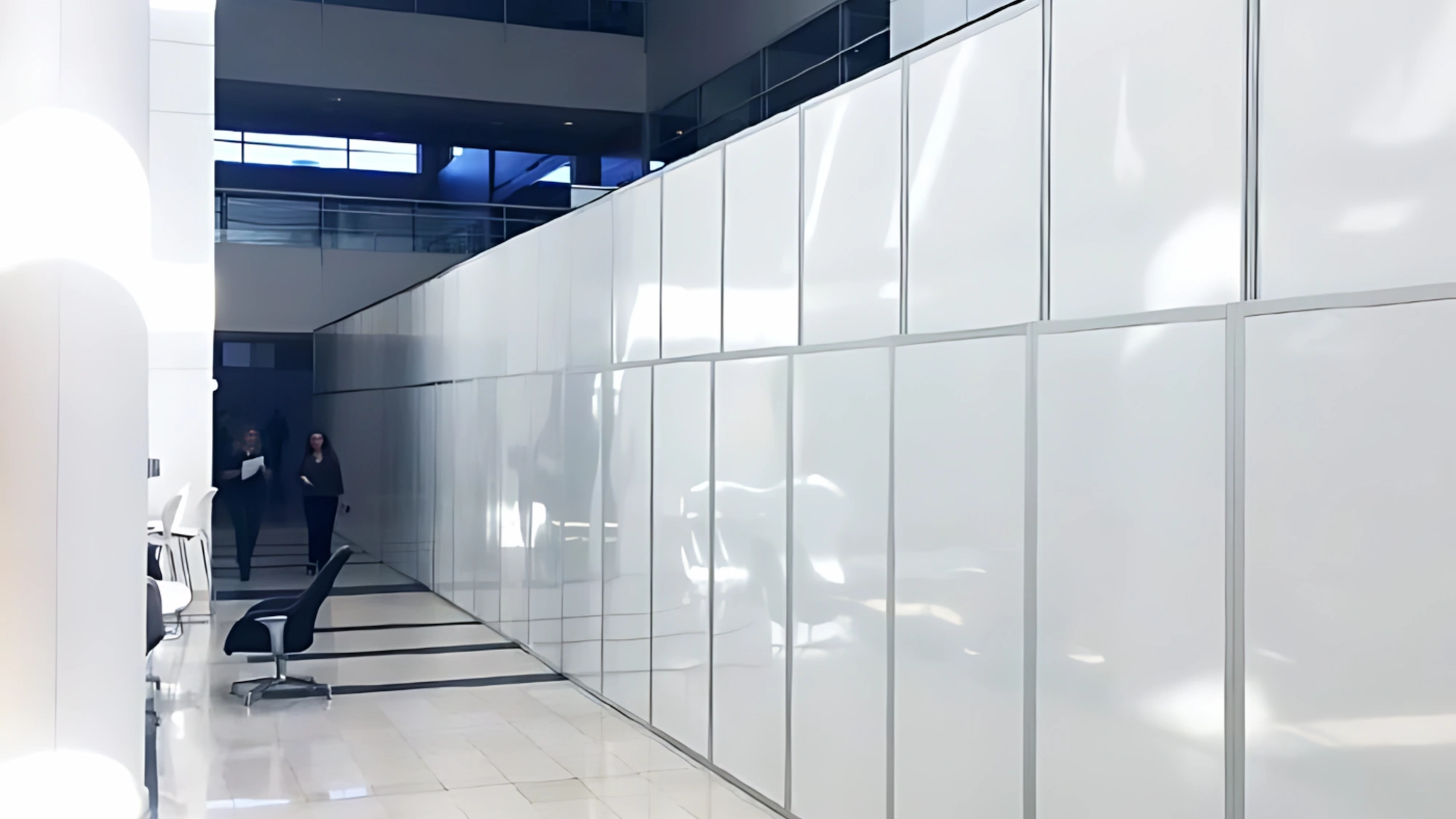
In a hotel lobby, a clean white modular panel tells guests that the property is investing in something better and that the project is professionally managed. A torn plastic tarp tells a different story. One that ends up in a review. Hospitality properties increasingly require that construction barriers reflect the property's brand standards: clean finish, professional appearance, and no visual disruption to the guest-facing environment. Our panel systems deliver that appearance from the first day of installation, on both sides of the barrier.
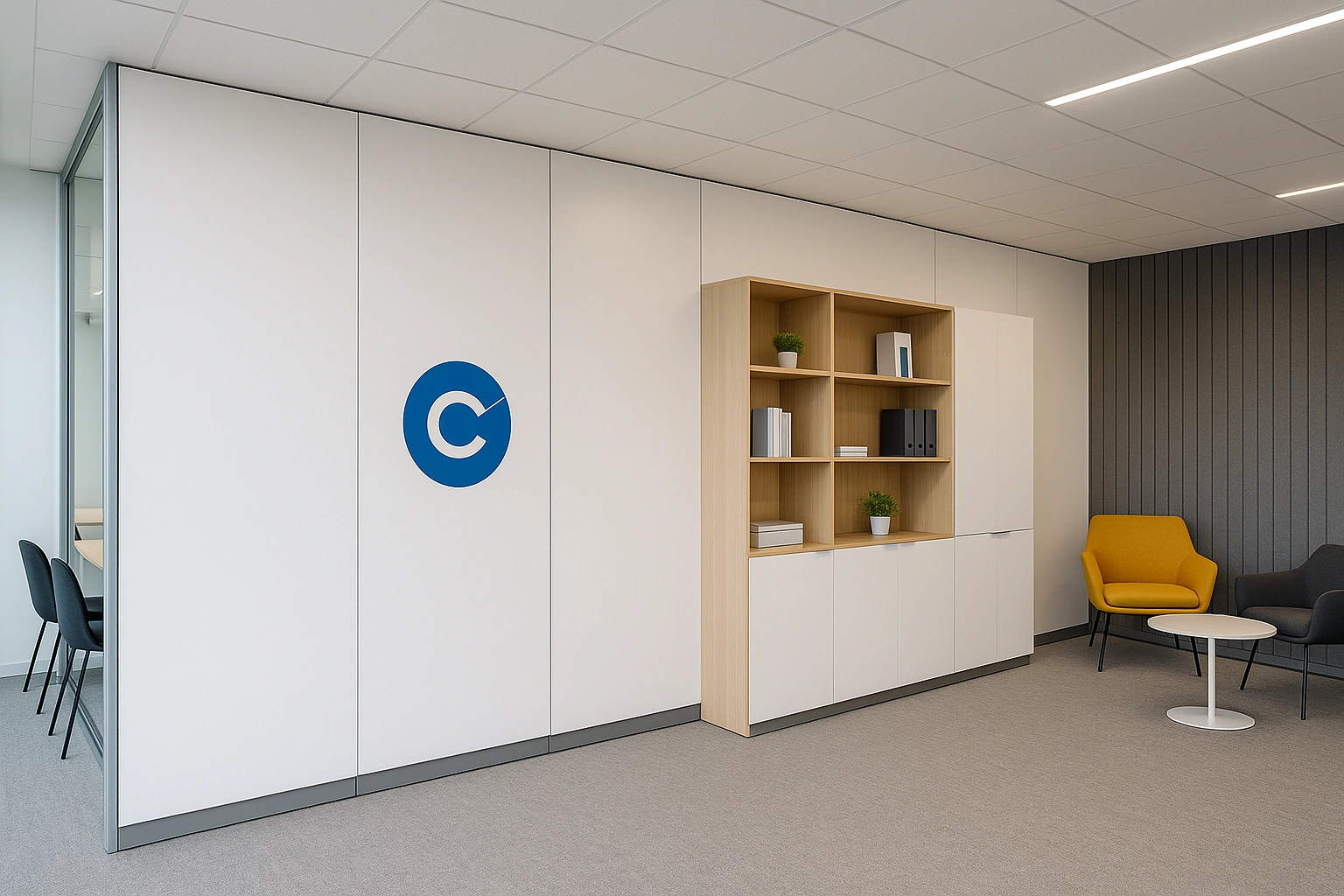
For luxury properties, branded graphics and custom panel wraps are available, turning the construction zone boundary into a communication touchpoint that tells guests what is coming and when it opens, rather than just concealing the work behind an anonymous white wall. This is standard practice at major hotel renovations and available on every 5DCCS project that calls for it.
Where We Work
Containment for Every Hospitality Renovation Type
From lobby overhauls to floor-by-floor guest room refreshes and ballroom upgrades, every hospitality renovation has its own guest sensitivity, brand standards, and operational continuity requirements. Here is how we support active construction across the full range of hotel and venue settings.
Lobby & Reception Renovations
The lobby is the first and last impression guests have of a property. Renovation work here cannot look chaotic. Our clean-finish panel systems maintain a professional, polished appearance on the guest-facing side from day one, keeping the check-in experience intact while the renovation proceeds behind the barrier. For luxury properties, branded wraps are available to communicate the project's vision rather than simply concealing the work.
Guest Floor & Room Corridor Renovations
Floor-by-floor renovations require containment that prevents construction noise from reaching occupied guest rooms above, below, and adjacent to the work zone. Best practice in hotel renovation calls for buffer zones of unoccupied rooms surrounding active renovation areas to serve as acoustic buffers — and limiting noisy construction to the 9 AM to 4 PM window that minimizes disruption during guest peak morning and evening periods. Our STC-rated systems maximize attenuation within that window.
Restaurant, Bar & Food & Beverage Expansions
Restaurant and bar renovations in active hotels must maintain the dining atmosphere in adjacent spaces while construction proceeds behind the barrier. Our containment systems reduce noise transmission into neighboring dining areas, prevent construction dust from reaching food prep or service areas, and maintain the clean visual environment that restaurant guests expect — even when a kitchen expansion or bar build-out is happening 30 feet away.
Ballroom, Conference Center & Event Space Upgrades
Event spaces present a scheduling challenge unique to hospitality: renovation must often proceed between booked events, with rapid installation and removal to maintain the venue's event calendar. Our modular systems install and remove in a single day, allow the event space to be ready for the next booking on schedule, and can be configured around complex ballroom layouts that require phased, section-by-section renovation to avoid canceling revenue-generating events.
Spa, Wellness & Fitness Facility Upgrades
Spa and wellness areas are defined by quiet and calm. Construction noise reaching a treatment room or relaxation lounge creates an immediate guest complaint and a likely refund request. Our sound-dampening panel options provide meaningful acoustic separation for renovation adjacent to active spa and wellness spaces, allowing facility upgrades to proceed without the noise penetration that would make adjacent services undeliverable.
Pool Areas, Fitness Centers & Common Area Upgrades
Pool deck renovations, fitness center expansions, and common area upgrades in active resorts require containment that works in environments with high humidity, chlorine off-gassing, and continuous foot traffic from guests in casual attire. Our systems maintain their structural integrity in these conditions, provide clear delineation between active amenity zones and construction areas, and remove completely at project close without the adhesive residue or surface damage that conventional barriers often leave.
What Hospitality Projects Require
The Standards and Obligations That Govern Hotel & Venue Construction
Hospitality renovation is governed by the same building code, fire code, and ADA requirements that apply in any commercial occupied building, but with an additional layer of brand standards, franchise requirements, and guest satisfaction obligations that most other construction environments do not face. A hotel brand's property improvement plan (PIP) frequently specifies construction standards including barrier appearance requirements, work hour limitations, and noise thresholds that GCs must meet to maintain brand certification.
The primary regulatory concern in hospitality construction is the same as any occupied public assembly building: fire egress must be maintained, barriers in egress paths must carry the ASTM E84 Class A fire rating, and ADA-compliant paths must be preserved throughout the renovation. But for a hotel operator, the practical concern goes further: a guest who is blocked from an accessible route, startled by an unmarked barrier, or awakened at 6 AM by drilling has a complaint that does not require a regulatory violation to be costly.
Why Modular Walls
What Plastic Sheeting Cannot Do in a Guest-Facing Hospitality Environment
Plastic sheeting is inexpensive and looks it. In a hotel lobby, a restaurant, or a resort common area, the barrier is visible to every guest from the moment they arrive. Here is what modular walls provide that plastic sheeting cannot.
Professional Appearance That Matches the Property's Standard
Our clean-finish panels present a polished surface on the guest-facing side from day one of installation. For luxury properties and brand-standard hotels, panels accept applied graphics, branded wraps, and project messaging that communicate the renovation's purpose rather than just concealing it. This is the difference between a barrier that reinforces the property's quality commitment and one that undermines it.
STC-Rated Acoustic Performance That Protects Guest Satisfaction
Plastic sheeting transmits nearly all construction noise to the other side. Our STC-rated panel systems reduce transmitted noise meaningfully — the difference between a guest who notices a renovation is happening and one whose stay is disrupted by it. For guest room floor renovations, our highest-STC options are the appropriate specification when renovation must proceed during occupied periods.
ASTM E84 Class A Fire Rating in 24-Hour Occupied Properties
Hotels operate around the clock with sleeping guests. Barriers in corridors, lobbies, and egress paths must carry the ASTM E84 Class A fire rating that life safety codes require in occupied public assembly buildings. All panels in our systems are Class A rated — the standard your fire marshal will enforce and your insurance carrier will ask about.
Same-Day Installation Without Disrupting Event Operations
Our installation generates zero dust and zero debris — critical when it is happening in a lobby where guests are checking in or a corridor where rooms are occupied. For event venues working around a booked calendar, same-day installation and same-day removal allow renovation to advance between events without the venue losing booked revenue to accommodate a construction setup and teardown window.
Reconfigurable as Renovation Phases Move Through the Property
Multi-phase hotel renovations — floor by floor, wing by wing, or section by section — need containment that relocates as each phase completes. We reconfigure without demolition, keeping the guest-facing environment clean and the construction disruption to the smallest possible zone at any given time. No drywall demolition event in the middle of a guest floor. No debris haul-off through the lobby.
Zero Demolition Debris at Project Completion
When renovation is complete, panels are removed and reused on the next project. No drywall to demolish, no debris to haul through the lobby, no cleanup left for housekeeping before the restored space opens to guests. For properties with sustainability commitments, the elimination of single-use construction materials supports those goals in a way that conventional containment methods cannot.
How It Works
From First Call to Final Removal in 5 Steps
We make containment straightforward. Most setups complete in a single day, with no mess left behind on either side of the wall.
Consultation & Site Assessment
We review your scope, timeline, and compliance needs from drawings or a site walk.
Custom Containment Plan
We design a layout with door placement, negative air ports if needed, and multi-phase sequencing.
Delivery & Installation
Our crew delivers and installs. Most setups finish in a single day. Clean and professional on both sides.
Ongoing Support & Adjustment
Projects change. If your layout needs to shift or expand, we handle it without rebuilding from scratch.
Removal & Closeout
When work is done, we remove everything. No demolition dust, no debris, no cleanup left for your team.
Renovating a Hotel, Resort, or Event Venue?
Most quote requests receive a response within one business day. Tell us your property type, your renovation scope, your event calendar, and your brand standard requirements, and we will put together a containment plan that protects the guest experience throughout the project.
FAQ
Hospitality Containment Questions
Not finding what you need? Call us at (855) 684-3752 or use the contact form — we are happy to talk through your project before you commit to anything.