
Optimized Temporary Containment for Efficient Construction
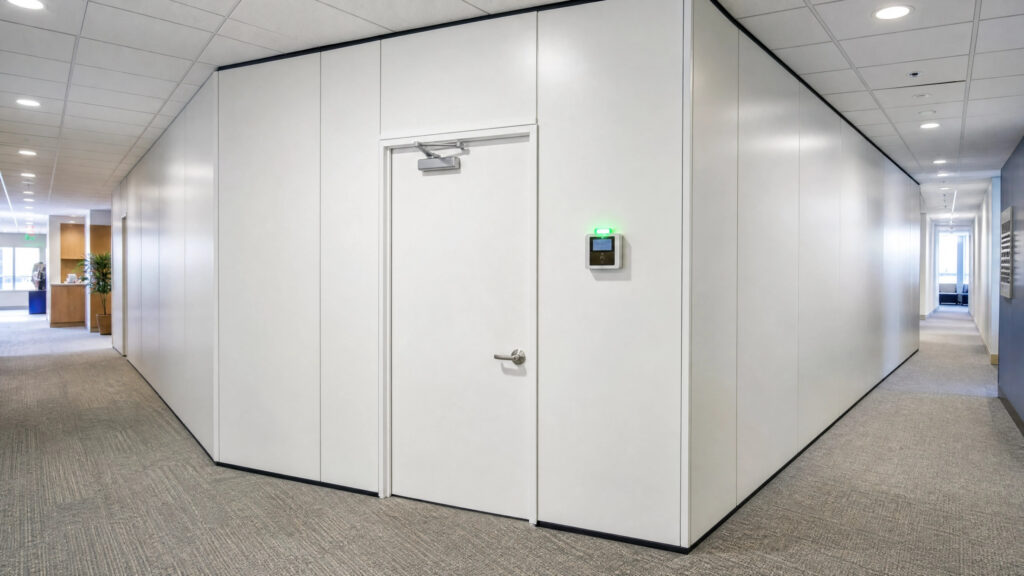
Part 2 of a two-part series. Covers the protocols, barrier systems, and compliance frameworks that prevent construction dust from reaching occupied spaces. Includes traditional containment failure analysis (plastic sheeting and drywall), a head-to-head barrier comparison table, ICRA 2.0 classification matrix, CDC/Joint Commission requirements, NFPA 241 fire separation standards, negative air pressure system specs, anteroom decontamination procedures, continuous monitoring, and barrier selection guidance.
What Happens When Construction Dust Escapes the Work Zone in Occupied Spaces
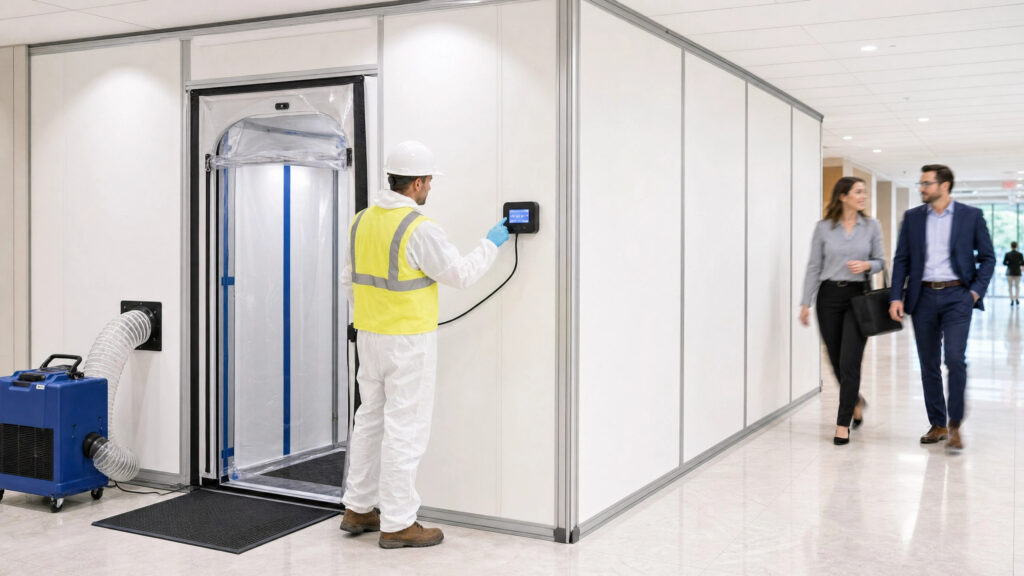
Covers the health, legal, and financial consequences when construction dust escapes containment in occupied facilities. Includes sick building syndrome symptoms, silica/cancer/COPD risks, Aspergillus outbreaks in hospitals, OSHA penalty data, insurance pollution exclusions, data center hardware cascade failures, commercial tenant lease exposure, and Bay Area regulatory pressures. Part 1 of a two-part series.
Affordable Temporary Walls for Events: Are They Worth It?
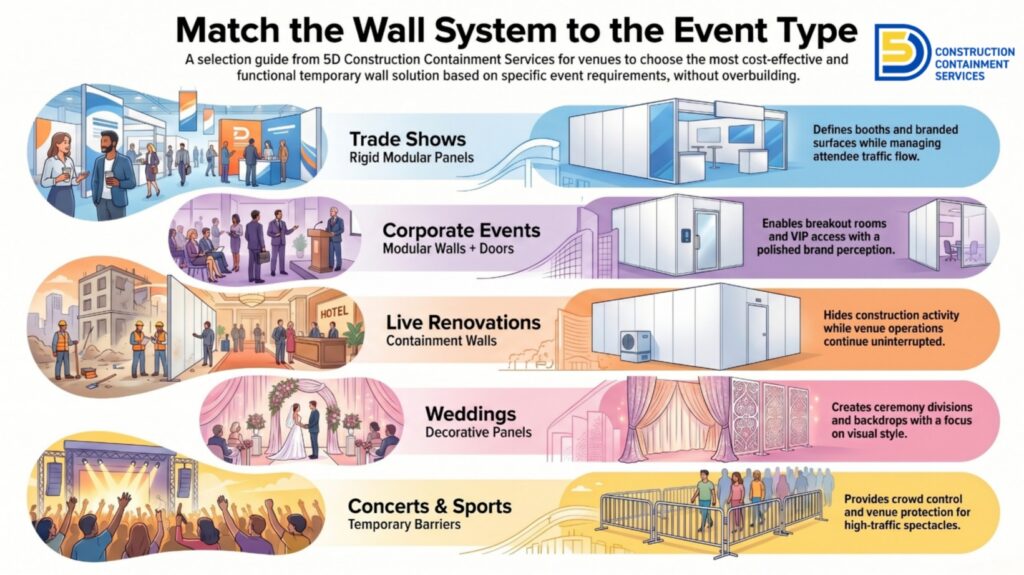
Educates event professionals, venue managers, and facility operators on whether affordable temporary wall systems are worth the investment. Compares system types (pipe and drape, modular rigid panels, stretch fabric/SEG, decorative), breaks down real pricing by category, covers the rent vs. buy decision, and delivers five reasons temporary walls pay off with emphasis on brand presentation and guest experience. Addresses drawbacks honestly and matches systems to event types including trade shows, corporate events, weddings, concerts, and venue renovations during live operations.
Owners Are Watching Your Temporary Wall Containment Choices More Closely Than You Think
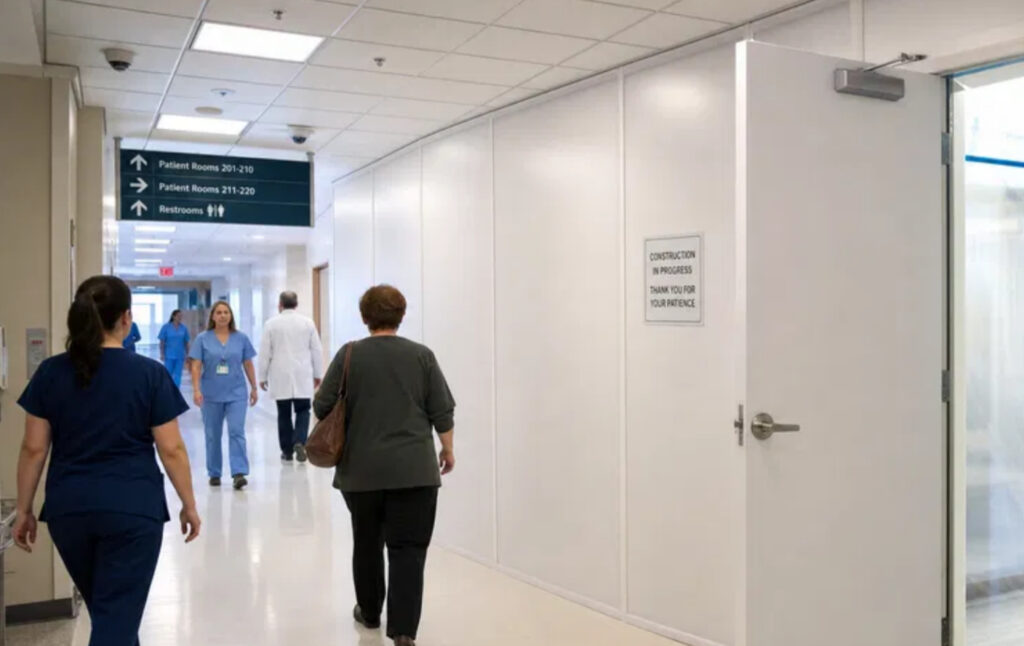
Educates building owners, facility managers, and GCs on why temporary wall containment choices are under increasing regulatory and financial scrutiny. Covers Cal/OSHA silica enforcement, ICRA 2.0 and Joint Commission requirements, NFPA 241 fire ratings, HVAC contamination risk, and the business case for specialty containment subcontracting.
Modular Temporary Wall Solutions vs. Permanent Structures: What General Contractors Need to Know
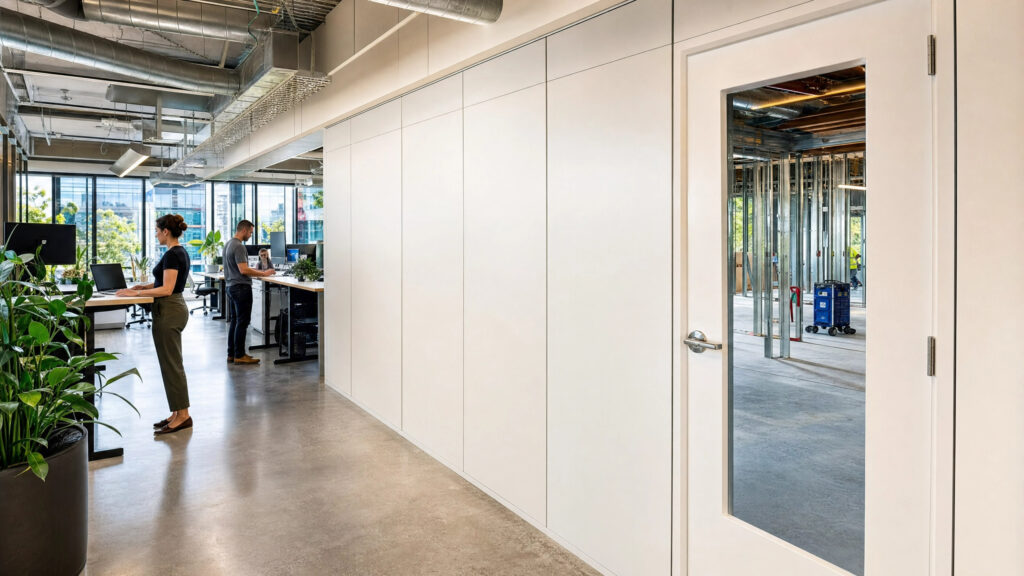
Compares modular temporary wall systems to permanent drywall containment for GCs and facility managers in California. Covers total cost of ownership, Cal/OSHA silica compliance, CBC/NFPA 241 fire code, ICRA healthcare requirements, CALGreen waste diversion, and project flexibility. Positions 5DCCS as the Bay Area full-service modular containment partner.
Negative Air Pressure Systems: ICRA Compliance Made Simple
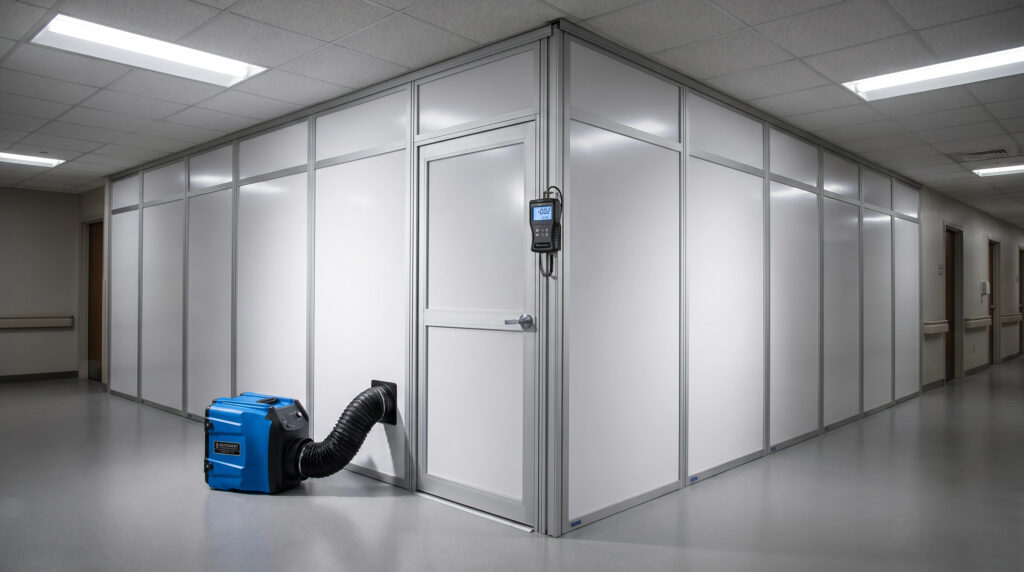
Negative air pressure is the mechanical backbone of ICRA compliance. Learn pressure thresholds, ACH requirements, HVAC isolation, and monitoring for Class IV and V projects.
Fire-Rated Temporary Walls: When do you need them (And When You Don’t)
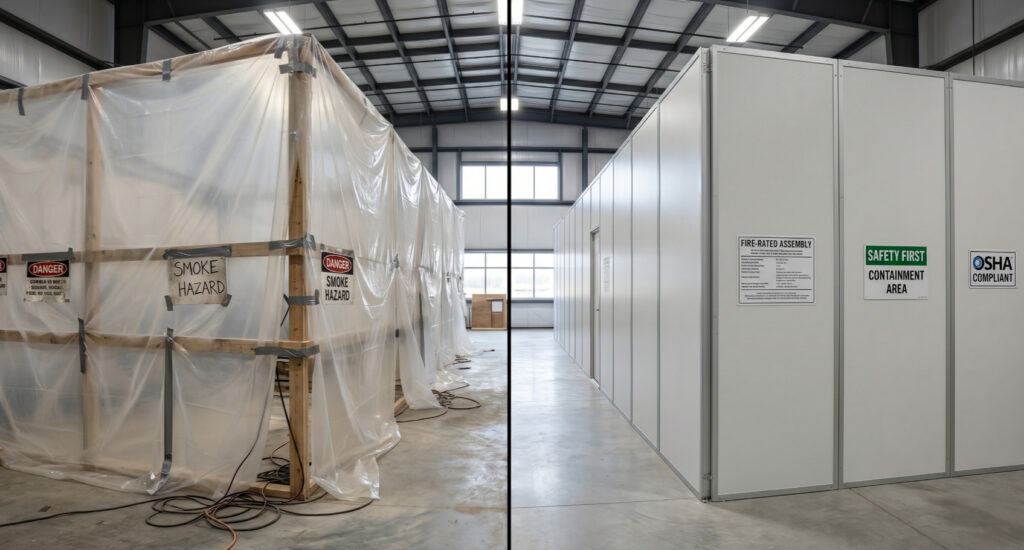
Educates GCs, facility managers, and property owners on the legal and practical distinction between ASTM E84 flame spread ratings and ASTM E119 fire resistance ratings, explains when California code mandates a fire-rated barrier vs. when Class A is sufficient, and positions 5DCCS as the Bay Area containment expert for fire-safe occupied renovations.
Clean Construction: Dust Control for Occupied Commercial Spaces
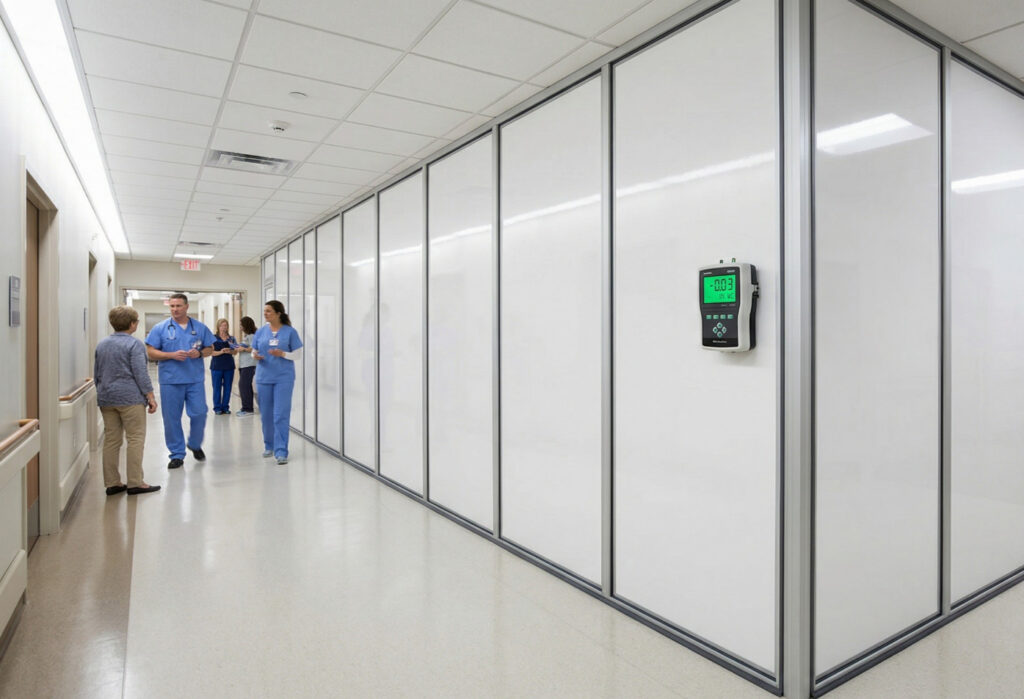
Learn essential dust control strategies for clean construction in occupied commercial spaces. Discover how 5DCCS modular walls ensure Cal/OSHA and ICRA compliance.