
Affordable Temporary Walls for Events: Are They Worth It?
Your guests notice more than you think. The exposed loading dock behind a fabric partition, the half-finished corridor visible from the cocktail reception, the echo that drowns out every breakout session. These are the moments where a venue stops feeling intentional and starts feeling improvised, and your brand takes the hit before anyone says a word.
Temporary walls exist to prevent those moments. The global temporary wall solutions market was valued at roughly $635 million in 2025 and is projected to reach $916 million by 2034, growing at about 5.5% annually. That growth is being driven by facility managers and event professionals who have figured out that the right wall system does more than divide a room. It protects the experience you are trying to create for the people in it.
But “affordable” covers a wide range. A pipe-and-drape kit for a wedding backdrop costs a few hundred dollars. A modular panel system for a multi-day trade show can run into the thousands. The question is not whether temporary walls work for events, but whether the investment pays off for your specific situation. The answer depends on what you need the walls to do, how your audience will perceive the space, and how often you will need them.
What Are Temporary Walls for Events?
Temporary walls are non-permanent barrier systems designed for rapid installation and removal without structural modification to the host space. In the events industry, they serve functions ranging from partitioning large convention halls into branded booths to creating private meeting rooms, blocking off back-of-house operations, controlling crowd flow, and building immersive branded environments that make a rented space feel purpose-built.
The systems available today fall into a few broad categories.
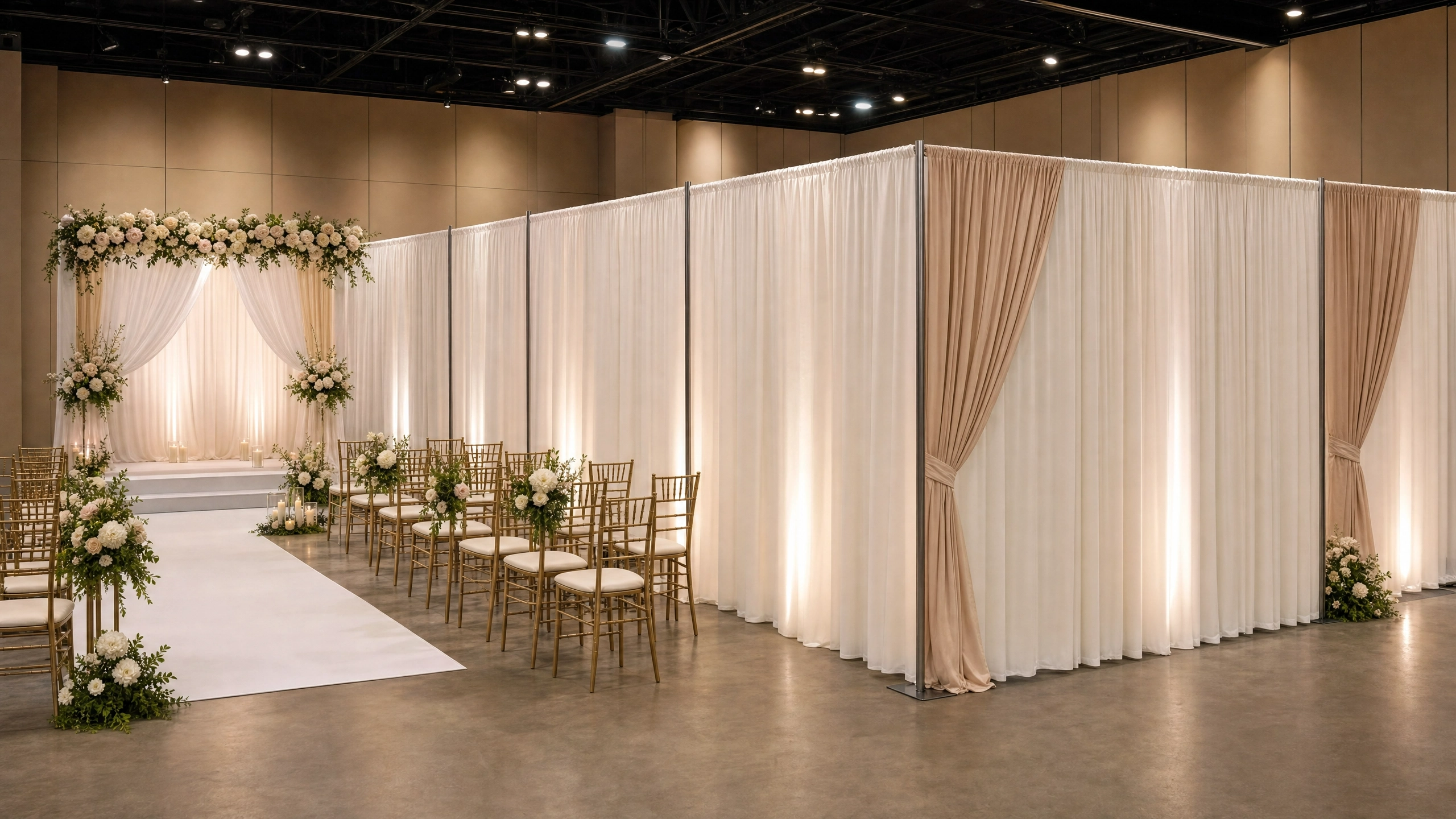
Pipe and drape is the most common entry point. Metal uprights, crossbars, and base plates support hanging fabric panels. It is lightweight, affordable, and genuinely useful for trade show backdrops, ceremony dividers, photo booth enclosures, and stage masking. Assembly is fast and tool-free. The trade-off is that pipe and drape offers very little structural integrity, minimal sound control, and limited visual polish beyond the fabric itself. It works best indoors in controlled environments where the goal is simple visual screening rather than a polished, branded presentation.
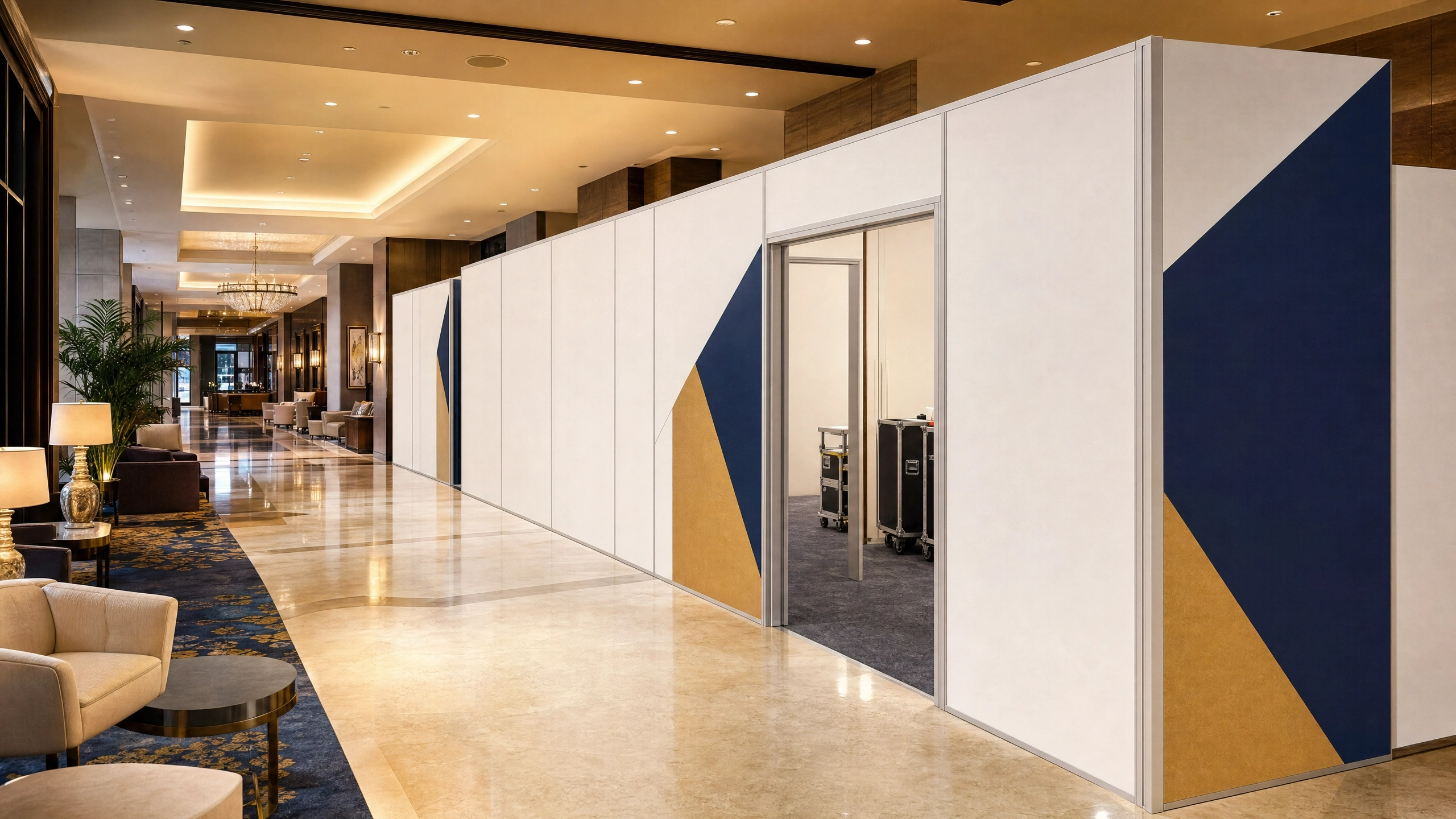
Modular rigid panel systems are a significant step up. These are engineered wall panels, typically aluminum-framed with composite or foam cores, that interlock into freestanding walls. They look and feel like real walls. Many offer fire ratings, acoustic performance, and the ability to accept custom graphics, integrated doors, or even transparent sections. For corporate events, trade shows, and any situation where guests or customers will be forming impressions of your organization, these systems deliver a level of professionalism that fabric barriers cannot match.
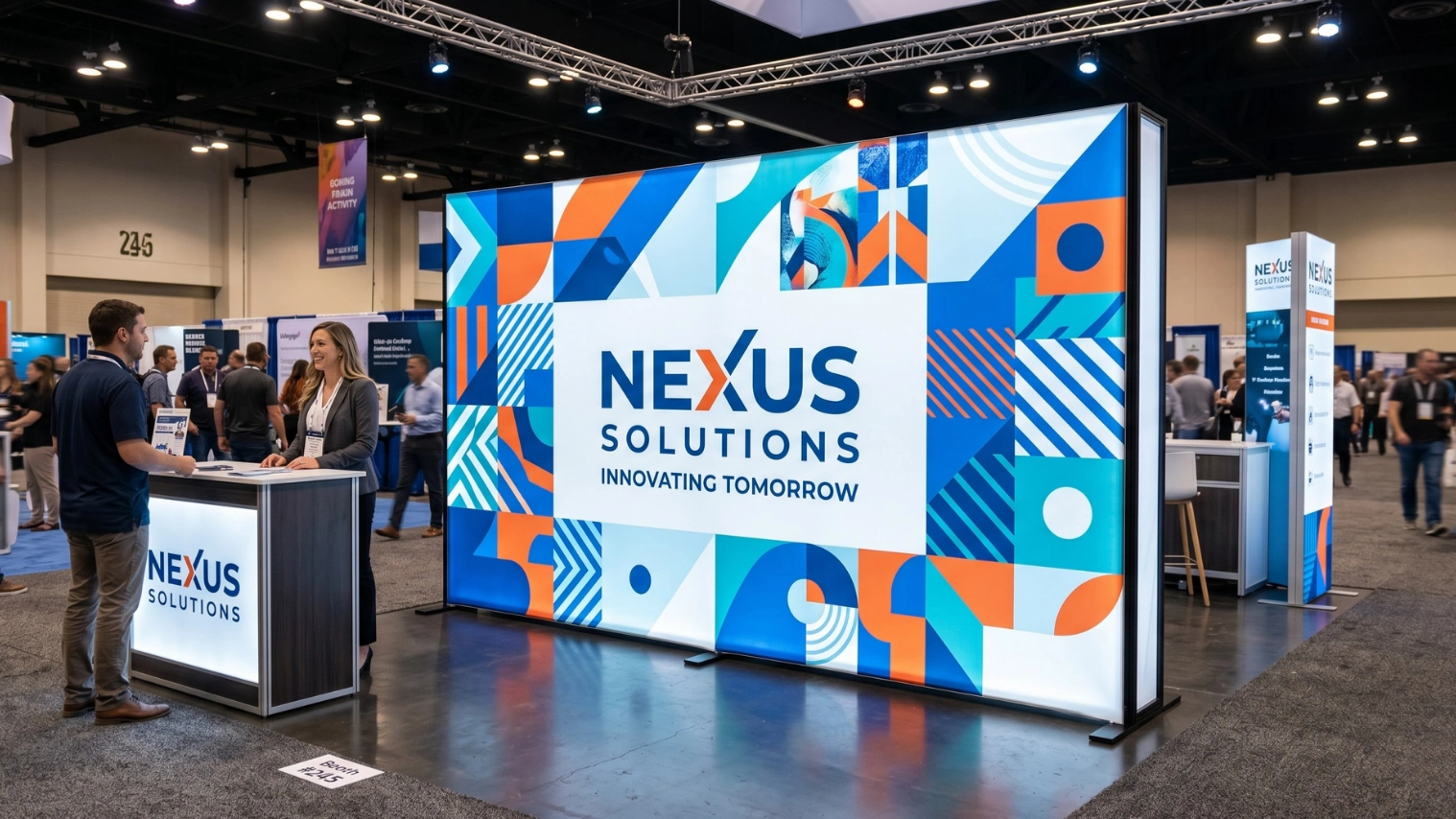
Stretch fabric and SEG (silicone edge graphics) walls sit in between. A lightweight aluminum frame holds a tension fabric panel taut and wrinkle-free. These are popular for branded backdrops, sponsor walls, and product launch displays because they accept high-resolution printed graphics cleanly and set up without tools.
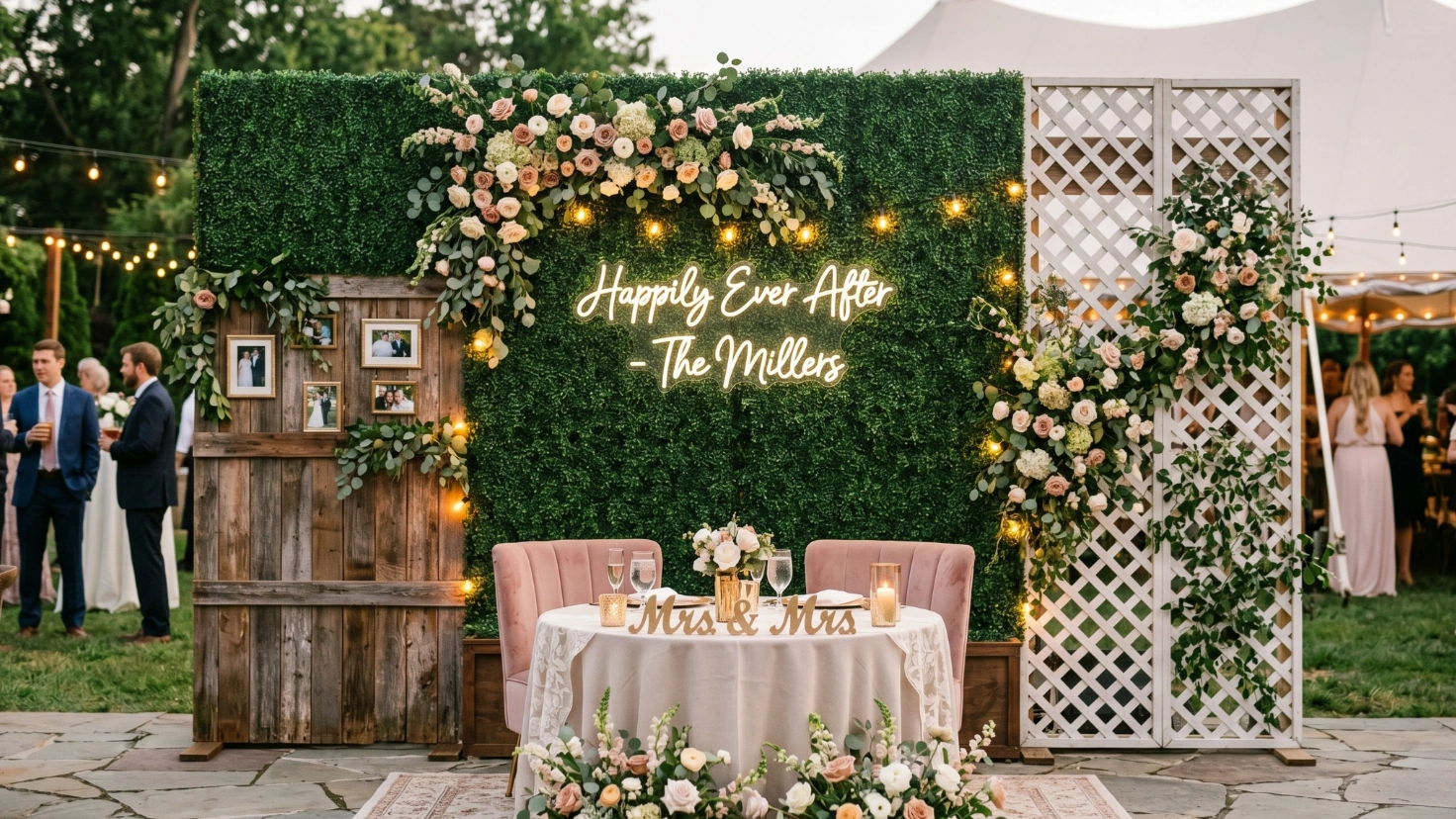
Decorative event walls are purpose-built for aesthetics. Boxwood hedges, barn wood panels, lattice screens, and similar options are common at weddings, galas, and upscale private events. They look beautiful but are typically rented at a premium and offer no structural or acoustic function.
What Do Temporary Event Walls Actually Cost?
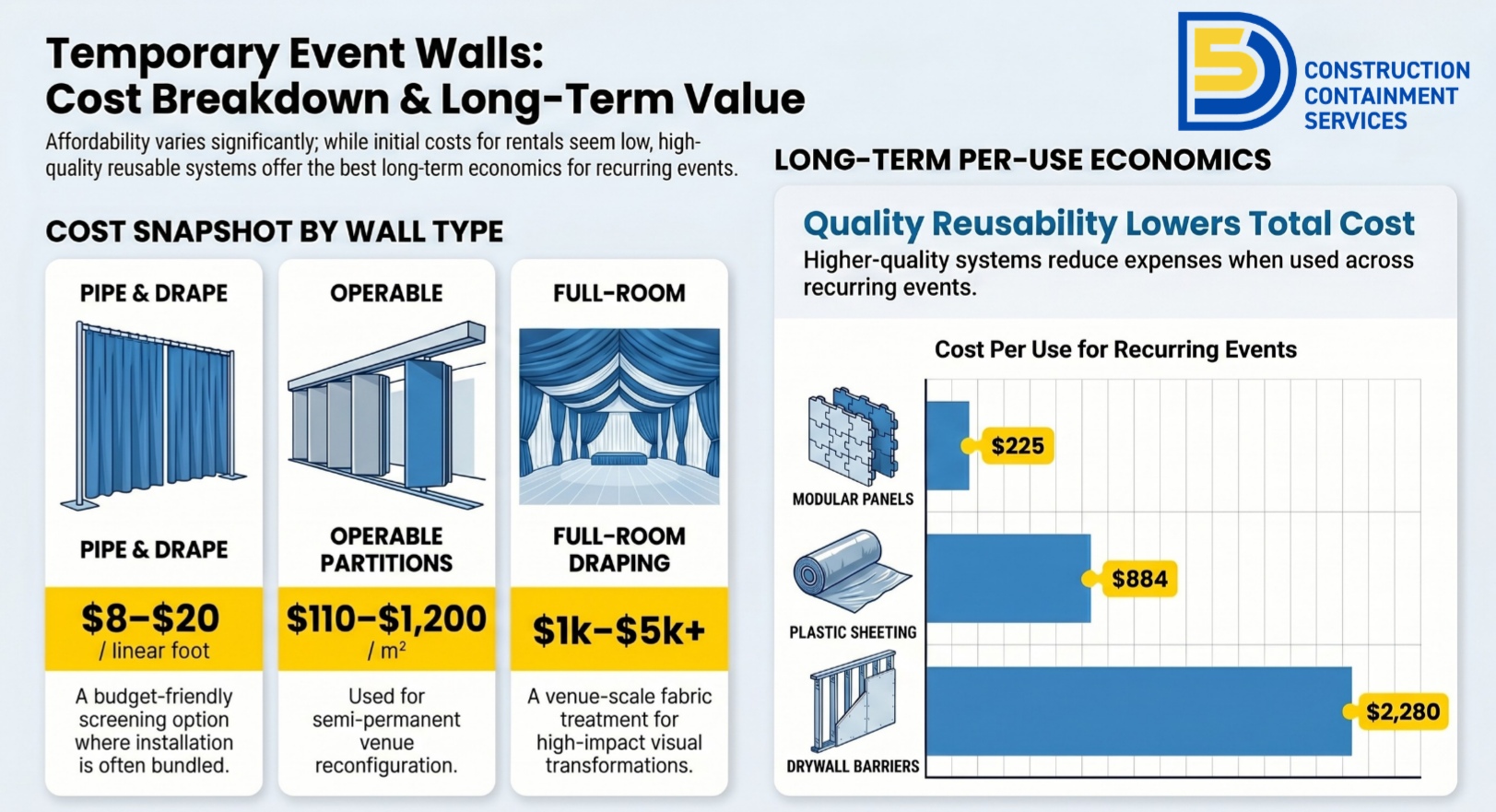
The pricing spread is wider than most people expect, and understanding it upfront prevents budget surprises later.
Pipe and drape is the most affordable option. Rental pricing typically runs $8 to $20 per linear foot, depending on the fabric type (polyester is cheapest, velvet and sequin panels cost more). A basic purchased backdrop kit ranges from $100 to $400 depending on height, width, and fabric quality. Full-room draping for a venue can run $1,000 to $5,000 or more. For a single event, a purchased pipe-and-drape setup totals roughly $545, while a rented setup including delivery and installation typically falls between $400 and $800.
Modular panel systems cost more upfront but carry dramatically lower recurring costs. Industry analysis from HEPACART shows that after the initial purchase, modular wall systems cost approximately $225 per use (about three labor hours and zero disposal fees). Compare that to roughly $2,280 per use for traditional drywall barriers and $884 per use for plastic sheeting, both of which generate waste every single time. If you are running events regularly in spaces that need professional-grade division, those per-use economics add up fast.
Decorative event panels (boxwood hedges, barn walls, herringbone panels) range from approximately $181 to $1,027 per panel from specialty rental companies, depending on the style and size.
Operable acoustic partitions for permanent or semi-permanent venue reconfiguration run $110 to $1,200 per square meter at factory-direct pricing, with small to medium project totals ranging from $1,000 to $20,000.
The cost picture gets clearer when you factor in what is included. Rental pricing from full-service providers often bundles delivery, installation, and removal. Purchase pricing requires you to handle logistics and storage, but the per-use cost drops rapidly with each deployment.
Rent or Buy: Which Makes More Sense for Your Events?
For most event organizers who use temporary walls a few times a year, renting is the smarter financial move. Renting eliminates the capital outlay, removes the storage problem, and shifts the labor burden to the provider. Full-service rental companies handle delivery, setup, and teardown so the event team can focus on what matters: delivering a clean, branded experience to the people in the room.
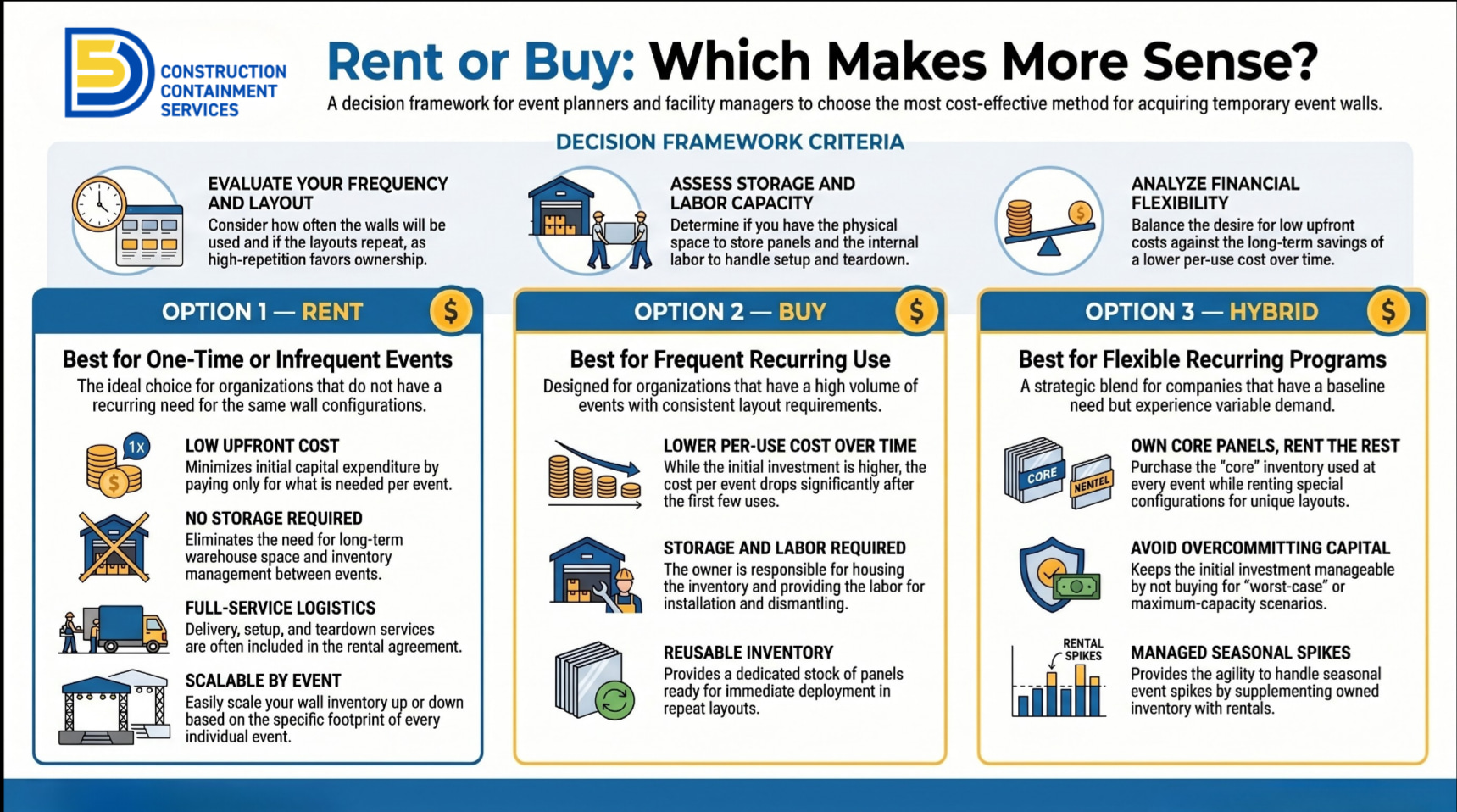
Purchasing starts to make sense when the walls will be reused regularly. Some modular containment systems pay for themselves in as few as two to three uses. Organizations that run frequent trade shows, recurring corporate events, or manage venues with regular reconfiguration needs often reach breakeven quickly. Research from the construction containment industry shows that 59% of long-time modular wall customers have reused their panels 20 or more times, which puts the per-use cost well below any single-use alternative.
A hybrid model works well for organizations that fall somewhere in between. Owning a base inventory of panels for routine needs while renting additional panels for larger or specialized events keeps costs flexible without overcommitting capital. This is the same hybrid strategy used by large-scale construction contractors who own their standard inventory and rent specialty configurations as needed.
Factor | Rent | Buy |
Upfront Cost | Low | Higher |
Best For | One-time or infrequent events | Frequent, recurring use |
Storage Required | No | Yes |
Labor/Setup | Often included | Self-managed |
Flexibility | High (scale up or down per event) | High (with your own inventory) |
Sustainability | Shared reuse model | Owned reuse model |
Five Reasons Temporary Walls Are Worth It for Events
1. Your Guests See a Finished Space, Not a Work in Progress
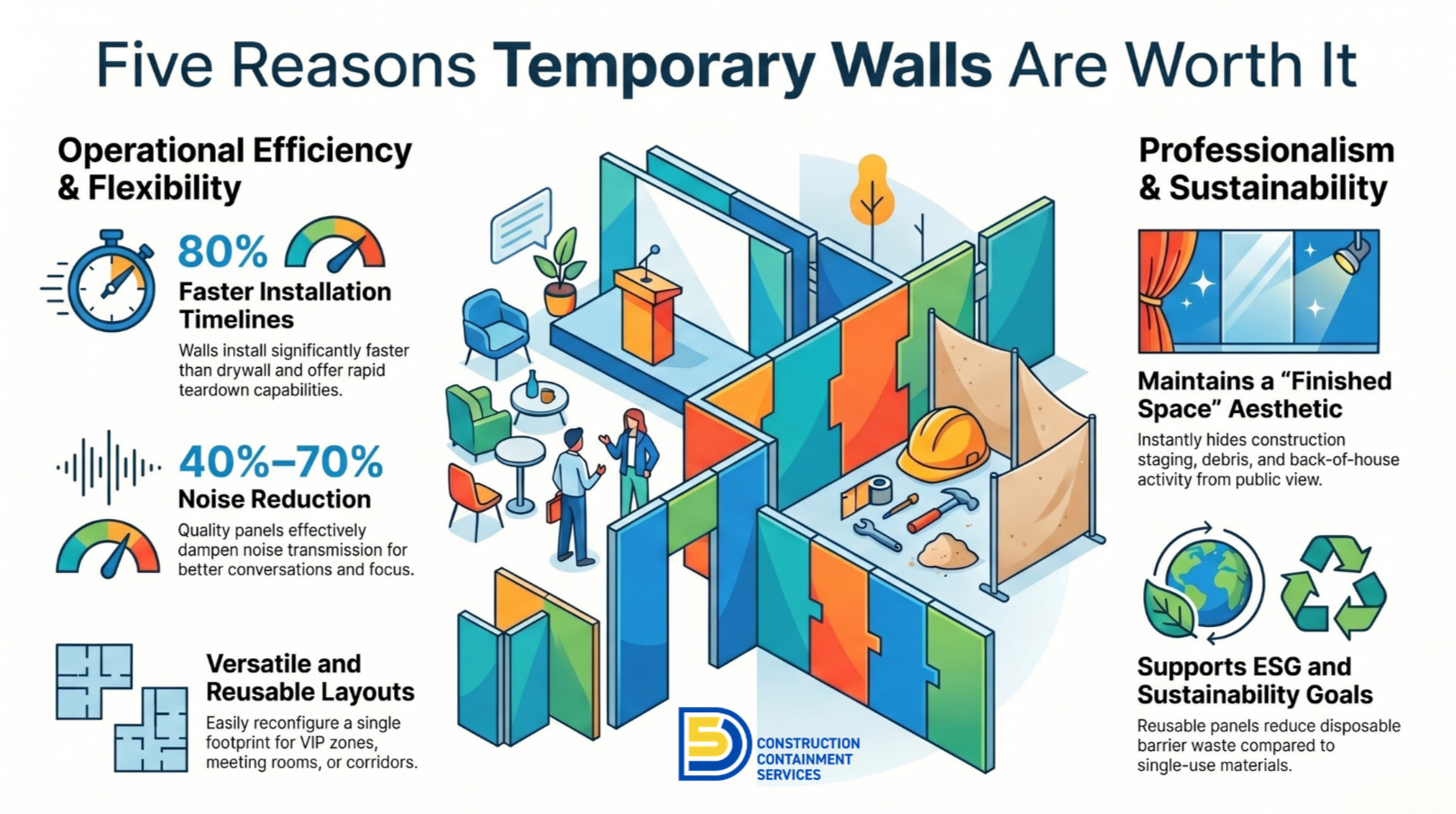
This is the angle that matters most for anyone hosting an event in a venue that is not purpose-built for it, or in a space where construction or renovation is happening simultaneously. Modular wall systems create clean, professional sight lines that hide what your guests and customers should never see: construction debris, staging areas, mechanical systems, and everything else that breaks the illusion of a polished environment.
The difference between a draped fabric barrier and a rigid modular wall is the difference between “we tried to hide it” and “there is nothing to hide.” For corporate events, product launches, and trade shows where brand perception is on the line, that distinction is worth real money. Clients, investors, and customers form impressions fast, and a visibly improvised environment undercuts whatever message you are trying to deliver.
Modular panel systems can also be wrapped in custom graphics, sponsor logos, step-and-repeat patterns, or full-bleed brand imagery. The wall stops being a barrier and becomes part of the brand experience. Full-page vinyl wraps applied to modular walls typically cost $12 to $25 per square foot, and wraps can be replaced between events or campaigns. Some systems support LED screen integration and fabric inserts, turning structural dividers into interactive displays. For trade shows and corporate events, this dual function of structural division plus brand communication stretches the ROI of every panel.
2. Speed That Protects Your Event Timeline
Tight venue turnarounds are the norm, not the exception. Modular wall systems install up to 80% faster than traditional drywall construction. A two-person crew can assemble 100 linear feet in under an hour. For event teams working against a hard load-in window, that speed advantage translates directly into lower labor costs and more time for the work that actually makes the event successful: staging, lighting, AV setup, and rehearsals.
Teardown is equally fast, which matters for venues with back-to-back bookings or facilities that need to return to normal operations immediately after the event ends. Planning your containment and layout strategy in advance makes the difference between a smooth load-in and a chaotic scramble that eats into your event prep time.
3. One Footprint, Multiple Configurations
The same set of modular panels can create entirely different layouts from one event to the next. Isolated VIP zones, private meeting rooms inside a trade show booth, product display corridors, gallery-style exhibit paths, or crowd control barriers at concerts and sporting events. Art and gallery designers use temporary walls to create depth and focal zones within large open venues that would otherwise feel flat and undifferentiated.
This flexibility is particularly valuable for venues and event companies that host multiple event types in the same space. Instead of rebuilding for every event, you reconfigure. The containment zoning and flow control strategies that work for construction projects apply equally well to event space design: define your zones, control traffic flow, and protect the areas your audience should not access.
For event organizers who have not considered temporary walls beyond basic construction applications, our overview of industries benefiting from temporary wall solutions covers how these systems serve venues, retail, education, and other environments well outside traditional construction.
4. Noise Reduction That Makes Conversation Possible
Sound management is one of the most underappreciated factors in event quality. Large open venues echo. Breakout sessions bleed into each other. VIP areas feel exposed when the main event floor is 20 feet away and running at full volume.
Quality temporary wall systems reduce noise transmission by 40% to 70%, depending on the panel type and configuration. Systems with meaningful Sound Transmission Class (STC) ratings provide genuine acoustic separation, enough to hold a private conversation, run a breakout session, or create a quiet consultation zone at a busy trade show. Modular panel systems designed for containment typically achieve 15 to 40 dB of noise reduction, which is the difference between shouting over the next booth and speaking at a normal volume.
Entry-level systems like pipe and drape offer almost no acoustic benefit. If sound control matters for your event, it is worth stepping up to panels with documented STC performance.
5. Sustainability That Aligns with Your Brand Values
Traditional drywall barriers generate construction waste every time they go up and come down. The EPA estimates that over 600 million tons of construction and demolition debris are generated in the United States annually, and drywall is a significant contributor. An average drywall installation produces about 12% material waste during setup, and the figure hits 100% when a single-use barrier is demolished at the end of the project.
Reusable modular panels eliminate that cycle entirely. They deploy and redeploy without generating disposal waste, with engineered lifespans of 20 to 100 or more reuses depending on the system. Some panels are manufactured from recycled materials, with documented savings of roughly 804 kg of CO2 per project compared to incineration of single-use materials. The modular construction approach can reduce material waste by up to 90% compared to traditional methods.
For event organizations with ESG commitments, sustainability-focused attendees, or brand values that emphasize environmental responsibility, this is a genuine differentiator, not a marketing talking point. It is also increasingly a practical requirement, as venues and clients add sustainability criteria to their vendor selection processes. In California specifically, CALGreen waste diversion requirements mandate 65% diversion of construction and demolition waste, adding cost and administrative burden to every project that uses disposable barriers. Our detailed look at sustainable modular temporary walls covers how these systems support green building goals across project types.
Potential Drawbacks to Plan For
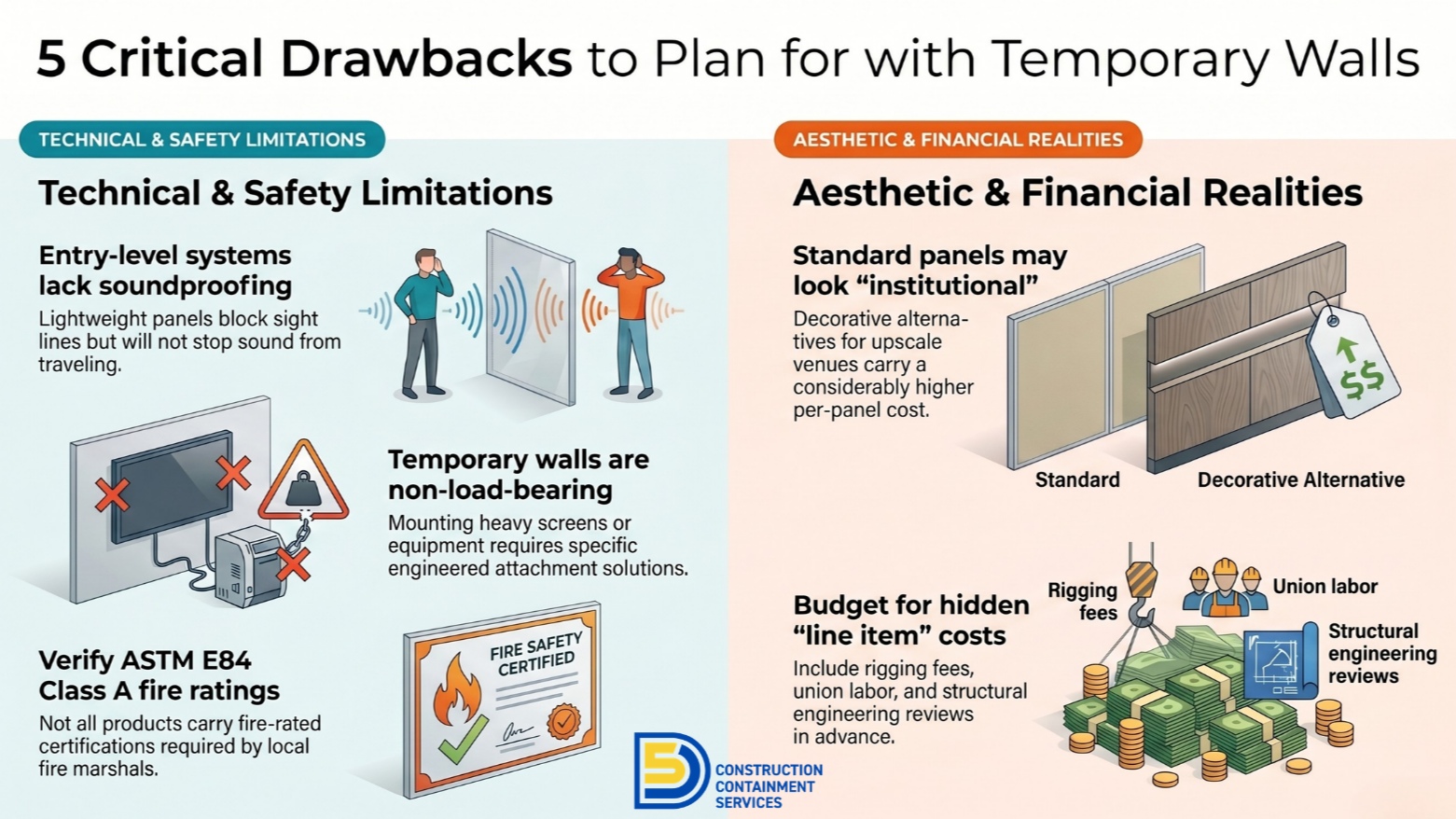
No system is perfect for every situation, and knowing the trade-offs upfront prevents problems during load-in.
Entry-level systems offer minimal soundproofing. Pipe-and-drape and lightweight panels will block sight lines but will not stop sound from traveling. If acoustic separation is a requirement, budget for panels with actual STC ratings rather than hoping a fabric barrier will handle it.
Temporary walls are not load-bearing. You cannot mount heavy screens, shelving units, or equipment on them without engineered attachment solutions. If your event design requires wall-mounted displays, confirm the panel system’s weight capacity before committing.
Fire rating requirements vary by venue and jurisdiction. Not all temporary wall products carry fire-rated certifications. Venues subject to NFPA 101 or local fire codes may require panels with ASTM E84 Class A ratings or equivalent documentation. Ask about fire ratings before you order, not after the fire marshal arrives. For more on how fire ratings affect temporary wall selection, see our guide to fire-rated temporary walls on jobsites.
Standard panels may not match upscale venue aesthetics. If you are working in a heritage building, a high-end hotel ballroom, or a venue with a strong design identity, standard modular panels may look institutional. Decorative alternatives fill this gap but at a considerably higher per-panel cost.
Hidden costs can inflate budgets. Immersive event installations often involve rigging fees, structural engineering review, union labor requirements at certain convention centers, and fire-retardant documentation. Budget for these line items in advance rather than discovering them during load-in.
Matching the Right System to Your Event Type
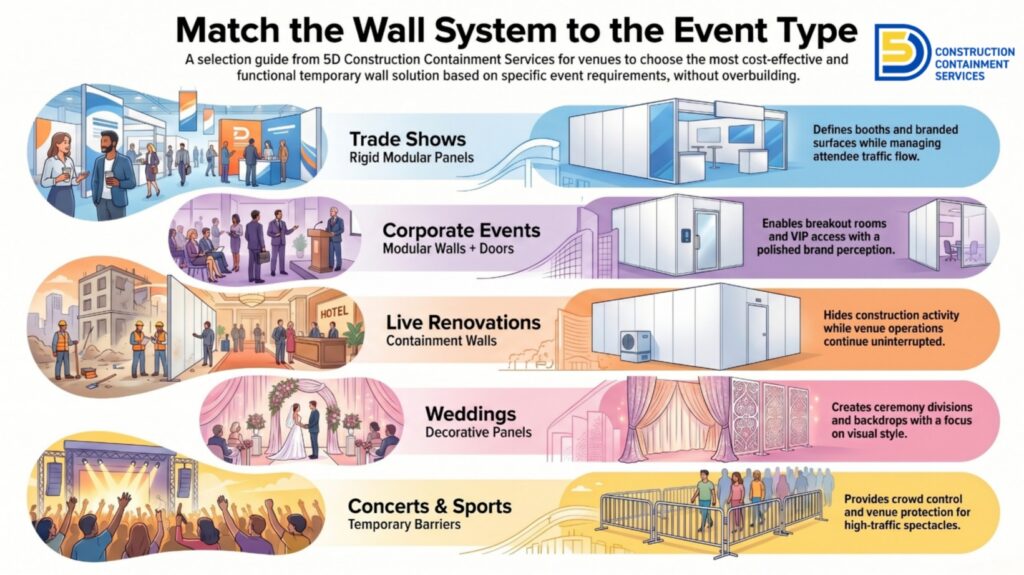
Trade shows and conventions. Modular rigid panels are the strongest fit here. They physically guide attendee traffic, delineate exhibitor spaces, and provide a clean surface for high-impact branded displays. For multi-day conventions in hotels and large event buildings, reusable modular exhibition walls are purpose-built for this application. The professional finish creates a backdrop that reflects well on every exhibitor and sponsor in the space.
Corporate events and conferences. Modular walls create flexible conference configurations within larger ballrooms or open floor plans. Integrated door panels allow controlled access between zones, which matters for tiered programming, sponsor-only areas, or one-on-one consultation rooms. The clean, finished appearance protects brand perception in front of clients and partners, which is the entire point of hosting the event.
Weddings and private events. Pipe-and-drape, decorative panels, and fabric walls serve as ceremony backdrops, photo booth enclosures, and aisle dividers. Aesthetic impact is the priority here, and the event rental market offers a wide range of options at per-panel pricing.
Concerts and sporting events. Temporary walls serve crowd control and access restriction functions, protecting venue infrastructure and preventing unauthorized entry to restricted areas. The visual quality of the barriers matters here too, since attendees will see and interact with them for the duration of the event.
Venue renovations during live operations. This is where event containment and construction containment overlap. When a hotel, casino, convention center, or entertainment venue is undergoing renovation while continuing to host events and serve guests, modular containment walls keep the construction invisible to everyone who is not wearing a hard hat. One well-documented casino renovation used over 150 feet of stacked temporary construction walls (332 linear feet total) installed by a single crew in roughly one week, keeping the gaming floor fully operational throughout. For guests and customers in those spaces, the wall is the brand. If it looks professional, the renovation does not exist in their experience. If it looks cheap or improvised, every visitor walks away with a diminished impression of the venue.
According to the International Facility Management Association (IFMA), facility managers are increasingly turning to modular temporary wall systems as a direct response to ESG mandates and the operational imperative to minimize disruption in occupied spaces. The broader modular wall panel market was valued at $1.6 billion in 2024 and is expected to grow to $2.5 billion by 2030, driven by demand for sustainable, fast-install systems across both construction and events.
The Bottom Line
Affordable temporary walls for events are worth the investment when the system matches the need. Pipe-and-drape works for budget-conscious events where visual screening is the only requirement. Modular panel systems earn their cost when you need professional presentation, acoustic performance, branded surfaces, or reusability across multiple events.
The most important factor is what your guests, customers, and clients will experience. A finished, intentional environment protects your brand and makes the people in the room feel like they are exactly where they should be. A visibly improvised one does the opposite, no matter how good the programming is.
If you are planning an event in an active facility, a venue under renovation, or any space where the environment needs to look and feel polished despite what is happening behind the walls, contact Construction Containment Services to discuss your project. We help event professionals and facility managers across Northern California create clean, professional spaces, even when the building around them is still a work in progress.