
Temporary Containment for Airports and Transportation Facilities Operating 24/7
Airport terminals operate 24 hours a day with zero tolerance for operational disruption. 5DCCS delivers modular temporary wall systems designed for high-traffic transportation environments — fast to install, professional in appearance, and built to meet the compliance expectations of airport authorities, TSA requirements, and construction safety regulations.
The Challenge in Transportation Settings
Active Terminals Cannot Afford Operational Disruption
Airport construction presents one of the most demanding occupied-space environments in any construction vertical. Passenger volume is high and continuous, security zone integrity is a federal requirement, and any barrier that impedes egress, blocks sightlines, or creates a safety hazard becomes an immediate problem with the airport authority and the FAA.
The FAA governs construction safety at certificated airports through Advisory Circular 150/5370-2G, which is mandatory for Airport Improvement Program-funded projects and requires a Construction Safety Phasing Plan. TSA-compliant barriers must maintain checkpoint integrity and keep secure and non-secure zones properly separated throughout the project. These are not optional standards. They are conditions of the airport's operating certificate.
Why Modular Walls Are the Right Fit
Professional Appearance Where the Public Is Always Watching
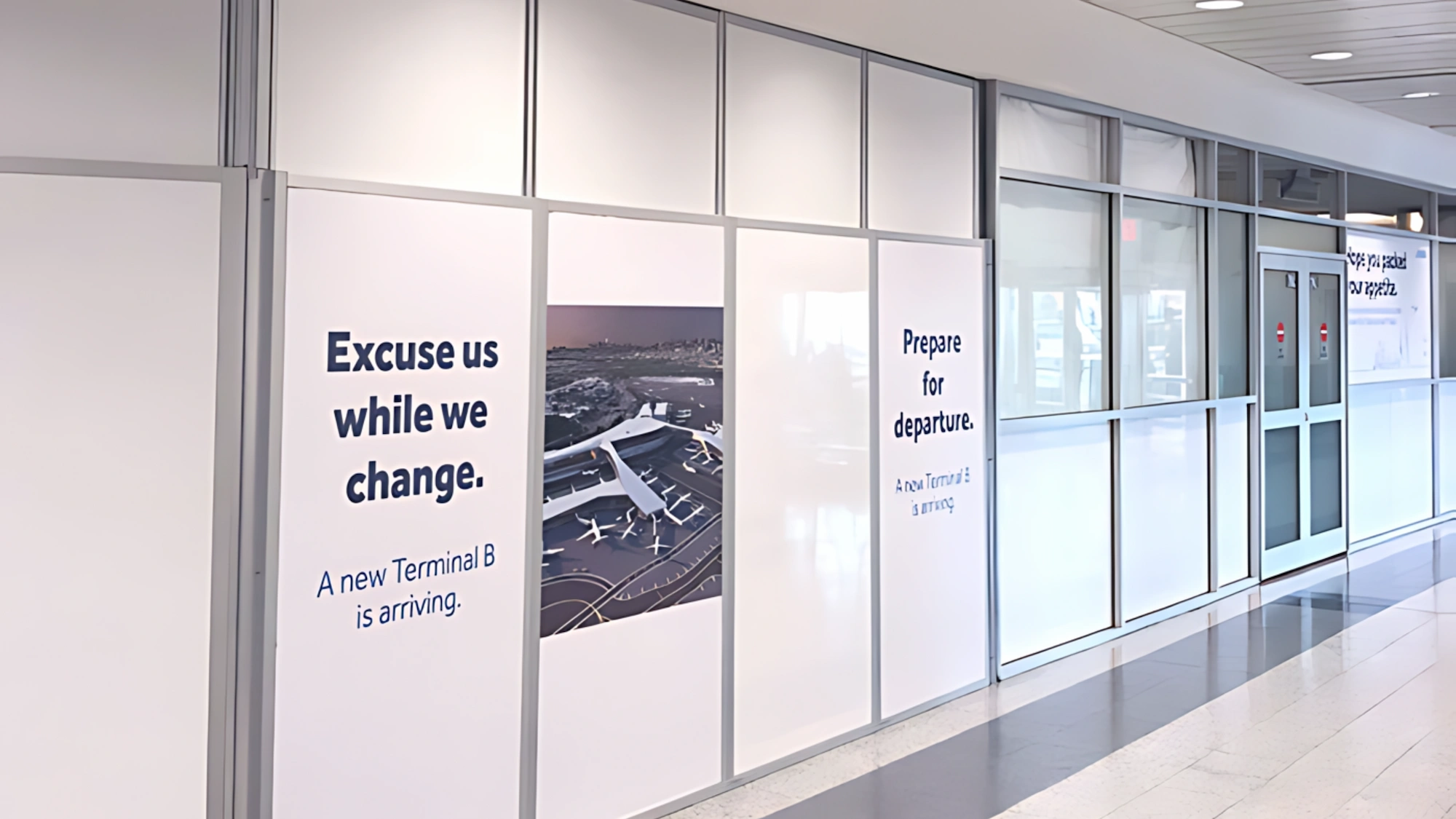
In an airport, passengers form immediate judgments about the facility based on what they see. Bare plastic sheeting communicates a different message than a clean, finished modular wall panel. Airport authorities increasingly require branded, professional-appearance containment that reflects the terminal's brand standards and minimizes passenger anxiety during renovation. Our systems install with a clean finish on both sides of the barrier and the construction side and the passenger-facing side.
We have worked in active airport environments in the Bay Area and understand the coordination requirements involved: advance scheduling with airport operations, badge and escort protocols for crew access to secure zones, and the off-peak timing that high-noise and high-dust work typically requires. That experience is what you are getting when you bring 5DCCS onto an airport project.
Where We Work
Containment Solutions Across Every Transportation Setting
From active airport terminals to rail platforms and bus facilities, every transportation project has distinct passenger volumes, security requirements, and operational constraints. Here is how we support active construction across the full range of transit environments.
Airport Terminal Renovations
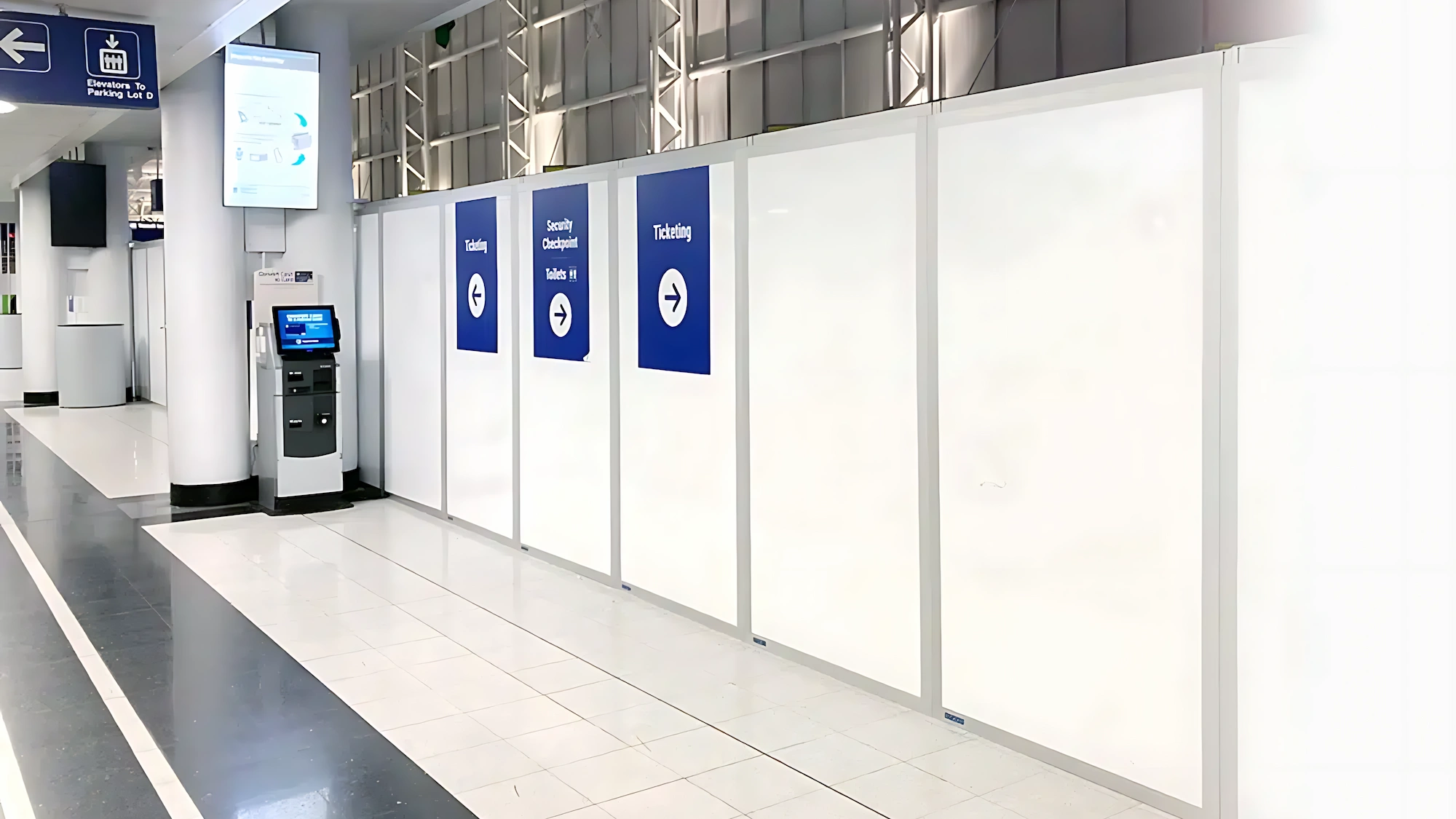
Active terminals require barriers that separate construction zones from passenger circulation without creating egress hazards or blocking sightlines to gates and signage. Our systems install with a clean finish on the passenger-facing side, maintain the professional appearance airport authorities expect, and can be branded with project graphics or messaging that transforms construction into a positive passenger communication opportunity.
Secure Zone Separation
TSA regulations require strict separation between secure and non-secure areas throughout terminal construction. Our rigid modular barriers maintain security zone integrity with no gaps, tears, or pressure failures that plastic sheeting cannot reliably prevent. When construction must occur near checkpoints or sterile concourse areas, the barrier itself becomes a security control — and it needs to perform like one.
Rail & Transit Station Maintenance
Rail stations, BART platforms, and light rail facilities require work zones that allow train operations and passenger flow to continue without interruption. Our systems create defined work zones with controlled access points, keep construction debris off platforms, and can be configured to accommodate the tight clearances common in transit station environments where every inch of pedestrian path matters.
Bus Terminals & Transit Centers
Bus terminals and intermodal transit centers see high passenger turnover throughout the day with limited off-peak windows for noisy or dusty work. Our containment systems keep waiting passengers separated from renovation activity, control dust in shared HVAC zones, and install fast enough to be operational before the first departure of the morning. Removal is equally clean — no demolition debris, no cleanup left for the facility.
Port & Ferry Terminal Modifications
Ports and ferry terminals present a combination of cargo handling operations, passenger boarding areas, and sensitive equipment that cannot be exposed to construction dust. Our barriers isolate renovation work from active cargo areas and passenger boarding zones, maintaining operational separation during infrastructure improvements, terminal upgrades, and dock facility modifications.
Emergency Repair & Rapid Containment
When a structural issue, utility failure, or unexpected damage requires immediate containment in an active terminal, the response time matters. Our modular systems can be deployed in hours, not days, creating a secure perimeter around the affected area while the facility continues operating around it. When the repair is complete, removal is equally fast — no demolition, no construction debris left behind.
Regulatory Compliance
The Standards That Govern Airport Construction
Airport construction is governed by a set of overlapping federal, security, and safety standards that most construction environments do not face. The FAA requires a Construction Safety Phasing Plan for any work at certificated airports receiving federal Airport Improvement Program funding. TSA requirements for secure area separation apply any time construction occurs near or within the sterile concourse. And the same NFPA fire and life safety standards that apply in any occupied building are enforced by airport authorities with their own inspection teams.
Understanding these frameworks before the project starts — not after the first inspection — is what separates a contained, compliant project from a work stoppage. 5DCCS brings direct experience in active Bay Area airport environments and understands the coordination and compliance expectations that come with working in these settings.
Why Modular Walls
What Transportation Projects Need That Plastic Sheeting Cannot Provide
Plastic sheeting fails in high-traffic pedestrian environments because it tears, gaps, and collapses under foot traffic and HVAC pressure. In a public space where passengers are watching, that failure is visible immediately. Modular walls solve the problem that plastic sheeting cannot.
Rigid Structure That Holds in High-Traffic Areas
Airport concourses, rail platforms, and bus terminals see constant pedestrian movement. Plastic sheeting buckles and tears. Our rigid panel systems maintain their integrity in high-contact environments throughout the duration of the project without daily re-taping or patching.
Professional Appearance on the Passenger-Facing Side
Airport authorities and transit agencies require containment that reflects their brand standards. Our clean-finish panels present a professional appearance to passengers from day one. Project graphics, directional signage, and branding can be applied to panels if required by the airport's standards.
ASTM E84 Class A Fire Rating Throughout
Plastic sheeting does not meet the fire standards required for use in egress paths or public assembly spaces. Every panel in our systems carries an ASTM E84 Class A rating — the standard required for barriers in occupied transportation facilities where fire egress is a life safety concern.
One-Day Installation Without Shutting Down Operations
Most standard configurations install in a single day. Our installation process generates no cutting dust, no debris, and minimal noise — critical when the work is happening 20 feet from an active gate or a passenger waiting area. The barrier is clean and functional from the moment it goes up.
Reconfigurable as the Project Phases Advance
Multi-phase terminal renovations require the construction boundary to move as each section completes. We reconfigure modular walls without demolishing and rebuilding from scratch, keeping your project moving without the downtime and debris that drywall phase transitions require.
No Demolition Waste When the Project Ends
When the renovation is complete, panels are removed and reused on the next project. There is no drywall to demolish, no debris to haul off, and no landfill cost. Airport facilities often have sustainability commitments — modular containment supports those goals in a way that single-use materials cannot.
How It Works
From First Call to Final Removal in 5 Steps
We make containment straightforward. Most setups complete in a single day, with no mess left behind on either side of the wall.
Consultation & Site Assessment
We review your scope, timeline, and compliance needs from drawings or a site walk.
Custom Containment Plan
We design a layout with door placement, negative air ports if needed, and multi-phase sequencing.
Delivery & Installation
Our crew delivers and installs. Most setups finish in a single day. Clean and professional on both sides.
Ongoing Support & Adjustment
Projects change. If your layout needs to shift or expand, we handle it without rebuilding from scratch.
Removal & Closeout
When work is done, we remove everything. No demolition dust, no debris, no cleanup left for your team.
Working on an Active Airport or Transit Project?
Most quote requests receive a response within one business day. Tell us your facility type, your security zone requirements, and your construction timeline, and we will put together a containment plan that fits.
FAQ
Airport & Transit Containment Questions
Not finding what you need? Call us at (855) 684-3752 or use the contact form — we are happy to talk through your project before you commit to anything.